

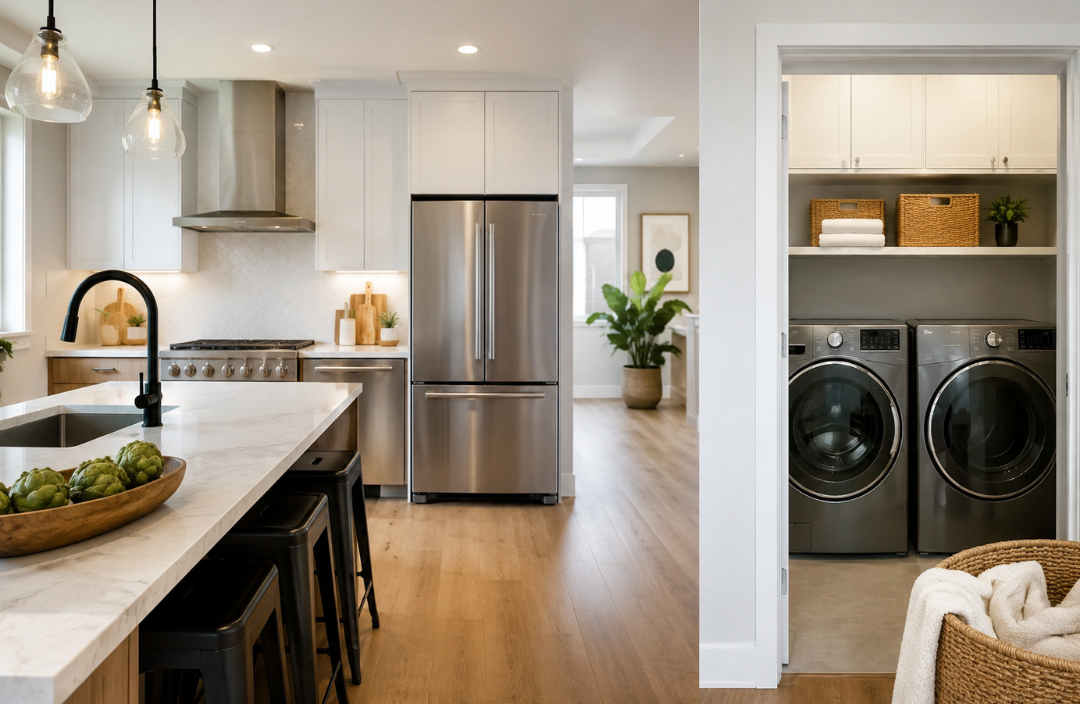
Choosing the right appliances for your home takes more thought than most people expect. Appliance choices affect your power bills, storage space, daily routine, and even resale value. If you buy based on looks alone, you often end up paying for features you never use.
Many homeowners tend to overspend on appliances that don’t suit the way they actually live. The biggest fridge in the showroom might look impressive, but it makes little sense for a small household. The same goes for oversized washers, restaurant-style ranges, and smart features that rarely get touched.
Price matters, but the sticker price is only part of the cost. A cheaper appliance can end up costing more over time if it burns through electricity or needs repairs after a few years. Natural Resources Canada recommends comparing lifetime operating costs, not just purchase price, when shopping for appliances. ENERGY STAR certified models usually use less electricity and water than standard units.
Energy efficiency matters most for appliances that run constantly or get heavy use. Refrigerators, dishwashers, washers, dryers, and freezers can add a noticeable amount to your monthly bills. Look for the EnerGuide label. It shows estimated annual energy use in kilowatt hours (kWh), which makes it easier to compare similar models.
That said, don’t get carried away chasing the “greenest” option if the payback makes no sense. Spending an extra $2,000 to save a few dollars a month rarely adds up. In many homes, mid-range appliances hit the best balance between cost, reliability, and efficiency. Practicality usually matters more than features.
Manufacturers love loading appliances with Wi-Fi apps, touchscreens, voice controls, and dozens of settings. Most people end up using the same two buttons every day. Simpler appliances often last longer and cost less to repair.
Think about how you actually use your kitchen or laundry room.
If you cook a few times a week, you probably don’t need a commercial-style 90 cm gas range. If your family runs laundry daily, a larger drum washer makes sense. If you entertain often, a quiet dishwasher becomes worth paying for.
Size is another common mistake. Appliances should fit your space properly and allow room for doors, ventilation, and movement. Measure carefully before buying. A refrigerator that sticks too far into a narrow kitchen gets annoying fast.
Noise levels matter more than people expect too. Dishwashers, range hoods, washers, and dryers can become irritating in open-concept homes. A slightly quieter appliance can make a noticeable difference day to day.
Induction cooktops deserve more attention than they get. They heat faster, waste less energy, and keep kitchens cooler than traditional electric ranges. They also reduce burn risk because the surface itself stays cooler. Some buyers now actively look for induction cooking in listings.
Repairs and parts availability should also factor into your decision. Some brands build good-looking appliances with poor long-term support. Before buying, check local repair options and replacement part availability. An appliance is not a bargain if you can’t get it serviced locally.
Matching appliance finishes can help a home look more polished, but you don’t need designer brands to achieve that. A clean, consistent look usually works better than mixing stainless steel, matte black, white, and panel-ready finishes in one kitchen.
For resale, buyers tend to notice appliances that look clean, efficient, and well maintained. They rarely care about expensive niche features. Reliable brands and energy-efficient models usually appeal to more buyers than luxury add-ons.
A good appliance purchase should make daily life easier without driving up your bills or creating maintenance headaches. That’s usually the sweet spot.