

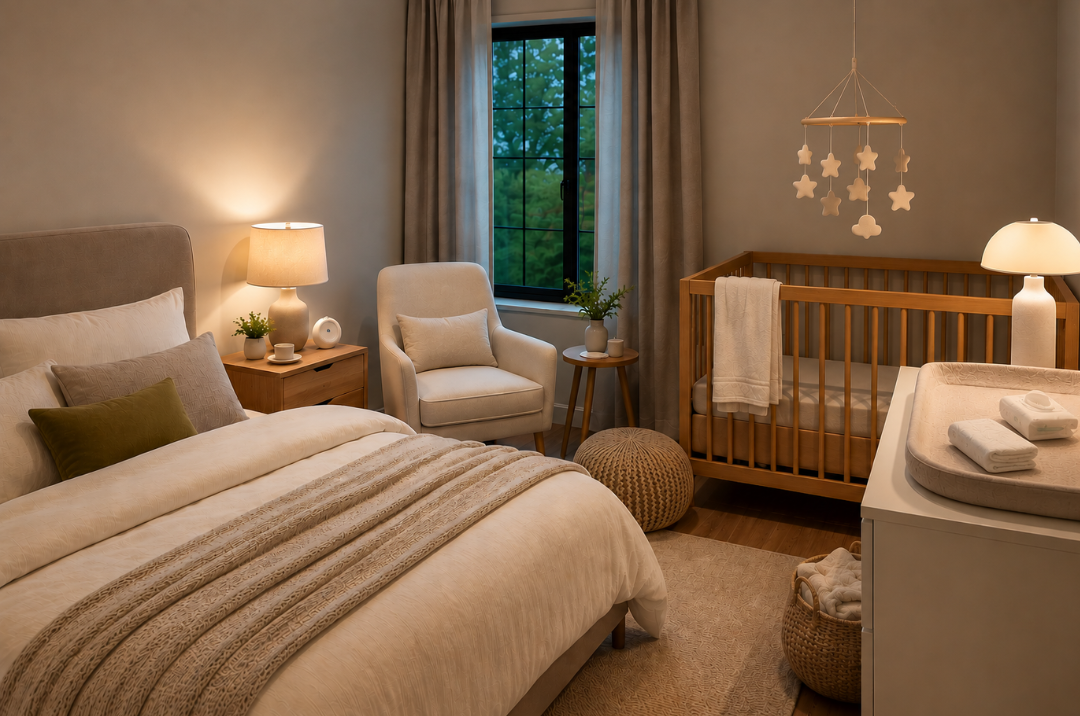
A well-designed parent-baby room can make daily life easier during your baby’s first months. You don’t need a large space or expensive furniture. What matters is creating a room that helps you sleep, feed, change, and care for your baby without constantly moving from room to room.
Start With the Layout
Before buying furniture, look at how you use the room.
Place your baby’s crib or bassinet close to your bed. This makes night feeds and check-ins easier. Leave enough walking space around the bed so you are not squeezing through furniture while holding your baby.
If your room is small, measure everything first. A standard crib is about 140 cm long and 70 cm wide. A mini crib often measures around 95 cm by 60 cm and can save a lot of floor space.
Keep Furniture to a Minimum
Many parents fill a nursery with items they rarely use.
Focus on the basics:
- A crib or bassinet
- A dresser
- A comfortable chair
- Simple storage
Skip furniture that serves only one purpose if space is limited. A dresser with a changing pad on top works better than a separate changing table in many homes. Choose furniture that can still work when your child is older. Items like a solid dresser or bookshelf can stay useful for years.
Create Separate Zones
Even in one room, it helps to divide the space into zones.
Keep sleeping, feeding, and storage areas organized. This makes the room feel calmer and helps you find things quickly during busy days.
A small chair and side table can create a feeding corner. A dresser with diapers and clothing nearby becomes your changing area. Your baby’s sleep space should stay clear and simple. Many designers recommend using zones to make shared parent-baby spaces work better.
Use Smart Storage
Baby items multiply fast. Use baskets, drawers, under-crib storage, and wall shelves to keep clutter under control. Store daily essentials where you can reach them with one hand.
A rolling cart is also practical. You can keep diapers, wipes, creams, bottles, and burp cloths in one place and move it around the room as needed.
Avoid open shelves packed with decorations. They collect dust and create more work.
Choose Soft Lighting
Think about how you will use the room after dark. A lamp beside your chair or bed provides enough light for feeding, changing, and settling your baby without lighting up the entire room.
Layered lighting can make the room more comfortable for both parents and babies.
Stick to Calm Colors
You do not need a themed nursery.
Soft neutrals, muted greens, warm beige tones, and light greys tend to age well and work with most home styles. They also make it easier to update the room later without repainting everything.
Very bright colors and busy patterns can make a small room feel crowded. If you want personality, add it through artwork, cushions, or a rug instead.
Make Your Comfort a Priority Too
A parent-baby room is not just for your baby.
You will spend hours feeding, rocking, reading, and settling your child. A supportive chair matters. Good blackout curtains matter. A bedside table for water, snacks, and your phone charger matters.
Many parents focus entirely on the baby and forget that they are using the room every day too.
Do Not Overbuy
Many parents are surprised by how little they actually need at first. Focus on the essentials and give yourself time to figure out what works for your family before bringing more items into the room.
Final Thoughts
The best parent-baby room is the one that works for your family. Keep the layout simple. Choose furniture that serves more than one purpose, and use smart storage. Leave room to move around comfortably. A cozy room comes from comfort and practicality, not from filling every corner with baby products.