

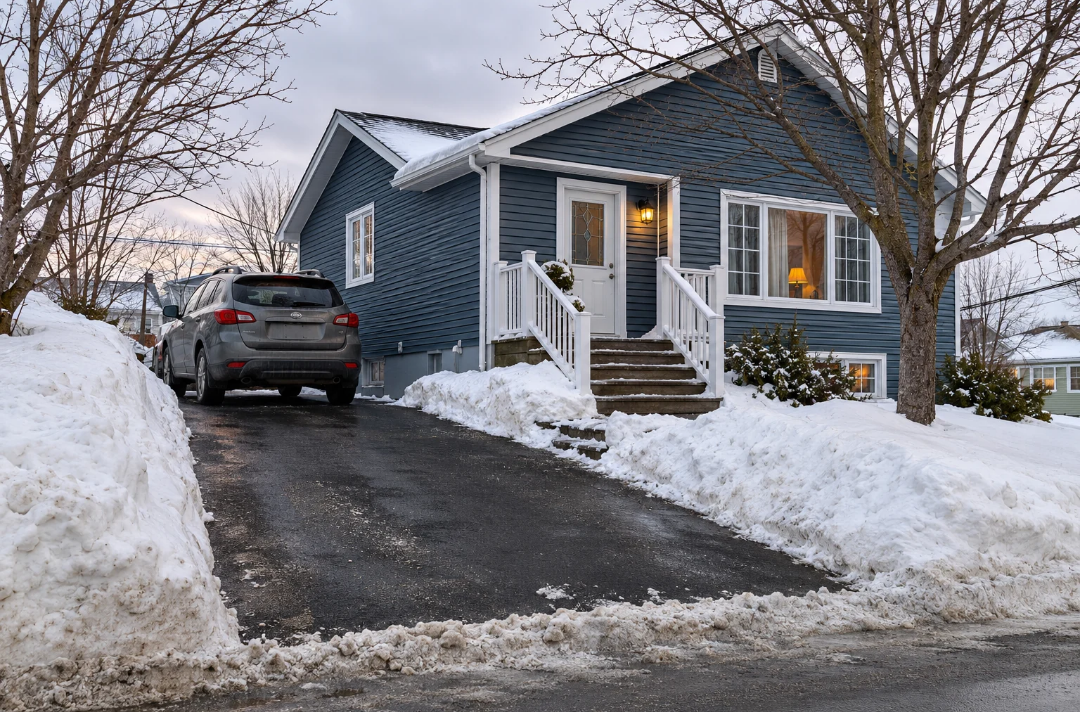
The driveway fits two cars. But does it still fit two cars when there’s a snowbank on each side?
That’s easy to miss during a showing, especially when the pavement is bare. In Newfoundland, winter access deserves a place on your house-hunting checklist. The driveway, parking and road-clearing arrangements will all affect how you use the property.
Before buying, ask how the home works after several storms—not just on the day you visit.
Look beyond the parking spaces
Start with the driveway’s slope, width and connection to the road. A steep driveway deserves a closer look, but so does a narrow, flat one with nowhere to put snow.
Ask the seller:
- Where does snow usually drift or ice collect?
- How is the driveway cleared, and what equipment is used?
- Can vehicles turn around once snowbanks build up?
- Does meltwater run across the driveway or walking route?
- Are there winter photos showing the property after a storm?
Think about your own routine. Getting children into the car, carrying groceries and leaving for an early shift can make the same driveway feel very different to different households.
Follow the route from the parking area to each entrance, too. For a home with an apartment, check how both households reach their doors and park without blocking each other.
Where will the snow go?
A wide driveway needs clearing, but it also needs somewhere for the cleared snow to go.
Look for usable space beside it. Fences, retaining walls, sheds and closely spaced houses may limit the options. Ask whether snow has previously been hauled away and what that involved.
Don’t assume you can push it onto the street or sidewalk. In Paradise, for example, snow-clearing regulations prohibit depositing driveway or parking-lot snow onto highways, streets or sidewalks. Check the rules for the property’s municipality.
Road plowing is another part of the picture. St. John’s advises that snow can be pushed into driveways during clearing operations and that residents are responsible for clearing their driveways. Ask the seller how they normally handle the buildup at the entrance.
Confirm who clears the road
A road that looks well maintained during a showing still needs a few questions answered.
Confirm with the municipality or provincial department whether the road is publicly maintained, how far service extends and what winter service applies. Ask specifically about the section leading to the property.
For a private road or shared lane, ask how neighbours manage snow clearing. Who books the contractor, how are the bills split and what does the price include? Find out when the contractor comes and who handles ice or snow that drifts back in afterward. Ask for any written agreement covering these arrangements.
Ask your lawyer to review any access and maintenance agreements before you commit. A seller’s account of how neighbours have handled things is useful background, but you’ll want to understand the arrangements that would apply to you.
If hiring a contractor for the driveway, get a quote for that particular property. Ask about snow storage, parked vehicles and return visits after the road plow passes.
Have a parking plan for storm days
If the property relies on street parking, check the current rules for that exact street. An available space during a showing may not be available during snow clearing.
St. John’s has several types of winter parking restrictions, including overnight, weather-related and designated-route bans. Downtown streets also have parking restrictions when scheduled snow removal takes place.
Find out where you could legally park instead, how far away it is and whether there’s a cost. Include every vehicle in your household when working through the plan.
For sellers, winter photos and clear information about snow-clearing arrangements can help answer these questions. Share what you know about recurring drifts, parking and past clearing costs without promising how future winters will unfold.
You don’t need to rule out a home because it has a steep driveway or limited snow storage. You do need to know what maintaining access will involve. Before making an offer, work through an ordinary winter morning: where you’ll park, who will clear the snow and how you’ll get from the door to the road.
Disclaimer: This article is intended as general information, not legal advice. Check with the municipality or provincial department responsible for the road to confirm winter parking restrictions and snow-clearing coverage. Your lawyer can advise on access rights and maintenance obligations for a private road or shared lane.