

When was the roof replaced? Who installed the mini-split? Do you still have the paperwork for the basement renovation?
You may know the answers now. Five or ten years from now, the details can be harder to remember.
Keeping a few records as you maintain your home can save you from searching old emails and calling contractors when you’re ready to sell. They’re useful while you live there, too, especially when something needs servicing or a warranty question comes up.
Keep the details behind the work
“Roof replaced” is a helpful note. An invoice showing the date, contractor, materials and scope of work tells you much more.
Save contracts, itemized invoices and proof of payment for major repairs and improvements. That could include roofing, windows, insulation, heating equipment, electrical upgrades or drainage work.
Keep any written changes to the original job as well. A quote describes what was proposed; the final paperwork should help explain what was actually completed. Canadian consumer guidance recommends putting renovation details, materials, payment terms and warranty coverage in writing.
Make a note of exactly what was repaired or replaced. For a roof, that might mean a few shingles, one section or the entire roof. Keeping those details now makes buyers’ questions easier to answer later.
Save permits and inspection records together
For work involving permits, keep the permit, approved plans and any inspection or completion documents you receive.
A permit and a completed inspection record serve different purposes. In St. John’s, for example, larger projects can require inspections at several stages, and the City places responsibility on the property owner to arrange the required inspections and obtain approval.
If you’re unsure what paperwork should exist for a past project, contact the municipality or authority that handled the work. Ask what records are available and whether anything remains outstanding.
It’s easier to investigate a missing document before you’re working toward a closing date.
Equipment paperwork deserves a place in the same folder. Keep purchase receipts, installation details, model and serial numbers, manuals and service records for items such as your heating system, air exchanger and appliances.
Receipts and warranty documents can help when making a warranty claim. Before advertising any remaining coverage to a buyer, ask the provider whether it can transfer and what steps apply.
Record repairs, including what happened afterward
If you’ve dealt with a leak or another recurring problem, keep a short record of what happened, who assessed it and what work followed.
For example, a basement repair file might contain the contractor’s assessment, invoice, dated photos and any follow-up correspondence. That gives you something concrete to refer to if questions arise.
Photos taken during renovations can also be useful, particularly before walls or ceilings are closed. Label them with the date, room and project so they still make sense years later.
Keep the wording factual. A receipt documents work performed; it doesn’t establish that a problem can never return. If you’re selling, discuss the repair history with your REALTOR® and lawyer so they can advise you on the information to provide.
Make the folder easy to maintain
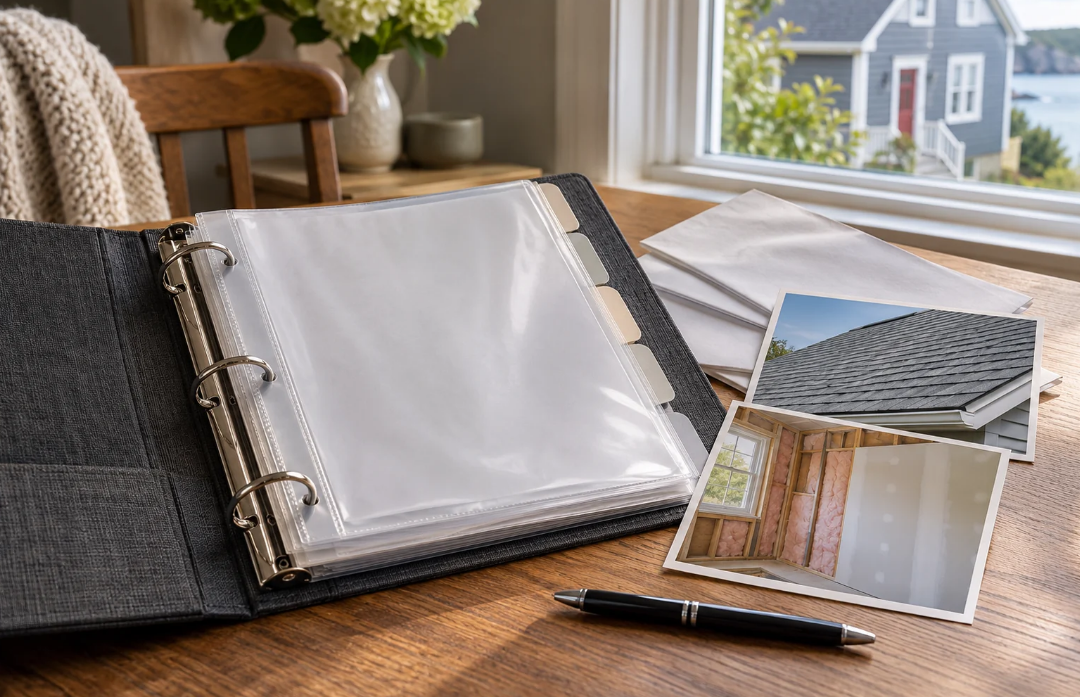
A paper binder, a digital folder or a combination of both can work. Choose whichever you’ll actually use.
Start with four sections:
- Repairs and renovations: contracts, invoices, payment records and photos.
- Permits and approvals: plans, permits and inspection documents.
- Equipment: manuals, warranties, installation and service records.
- Property documents: copies of surveys, plans and other documents received when you bought the home.
Label each file with the date and type of work so you can find it easily. Keep a backup of digital records and store important original documents somewhere safe.
Before selling, ask your REALTOR® which records would be helpful to buyers. Remove personal and financial information from any copies you share, and keep a set for yourself after the sale.
You don’t need to reconstruct every small repair you’ve ever made. Start with your next service visit or home project. Save the paperwork while it’s easy to find, and you’ll have one less thing to track down when you need it.
This article provides general information only. Documentation requirements, permit rules and warranty terms vary by location, project and provider. Keeping records does not confirm that work meets current codes or replace a professional inspection. Consult your municipality, warranty provider, REALTOR® or lawyer for advice specific to your property.