

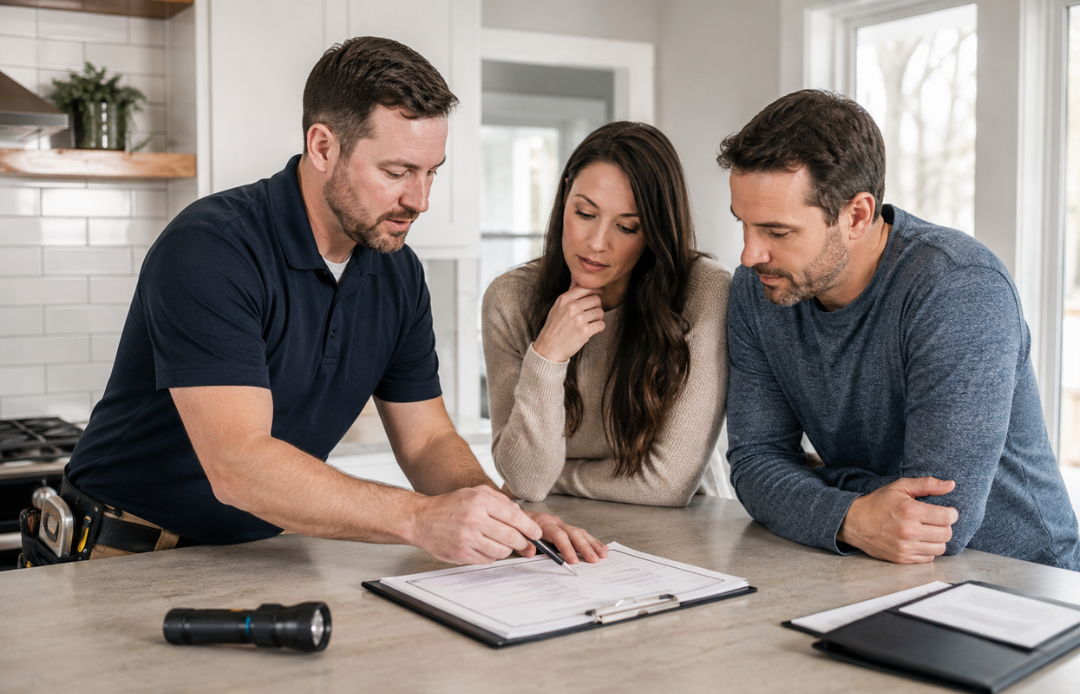
Buying a home is stressful enough without opening an inspection report that’s full of comments. It happens all the time. Buyers can be overwhelmed when presented with pages of notes about everything from loose handrails to electrical outlets, roofing, plumbing, and heating systems. It can feel like the house is falling apart, but most of the time, it isn’t.
A home inspector’s job is to point out anything that could affect the home’s condition, safety, or future maintenance. That means they’re looking for the small stuff just as much as the big stuff. A twenty-page report doesn’t automatically mean you’re buying a bad house. It usually means the inspector did a thorough job.
The first thing to do is stop looking at the number of items and start looking at what those items actually are. A worn deck board, a dripping faucet, missing caulking around a tub, or an aging hot water tank aren’t unusual findings. Every home, whether it’s five years old or fifty, will have maintenance items.
The things that deserve your attention are the ones that could cost thousands of dollars or create safety concerns. Foundation movement, water entering the basement, roof leaks, outdated electrical panels, furnace problems, or signs of mold are all worth discussing further. Those are the issues that can change the value of the home or the cost of owning it.
This is also the point where your REALTOR® becomes one of your best resources. They’ve likely seen hundreds of inspection reports over the years and know what’s common for homes in your area. An older home is naturally going to have different findings than a newer subdivision home. Experience helps put those reports into perspective.
If there’s something in the report that raises questions, don’t guess. Get another opinion. An inspector may recommend having an electrician, roofer, plumber, structural engineer, or HVAC contractor take a closer look. Spending a few hundred dollars on an expert opinion can save you from making a decision based on assumptions.
Figure out what you’re dealing with first. Seller’s will sometimes complete certain repairs before closing. In other cases, the purchase price is adjusted to reflect the work required. Buyers occasionally accept the property as it is because the issues are already reflected in the price. Every negotiation is different, and market conditions often influence how much flexibility there is on both sides.
It’s important to realize when to walk away. If the inspection uncovers major structural problems, significant water damage, or repairs that stretch well beyond your budget, it may make more sense to keep looking. That’s exactly why home inspection conditions exist. It’s far better to learn about serious problems before you own the property than after you’ve moved in.
Sellers can benefit from this process too. Homes that have been well maintained generally create fewer surprises during the inspection. Taking care of obvious repairs before listing can make negotiations much smoother and help buyers feel more confident. Some sellers even arrange a pre-listing inspection so they know exactly what buyers are likely to see.
It’s important to realize is that very few homes receive a perfect inspection report. Even brand-new construction can have deficiencies. The goal is to understand the home’s condition, know what repairs may be coming, and decide whether it’s still the right fit for you. A good inspection gives you information. What you do with that information is what really matters.