

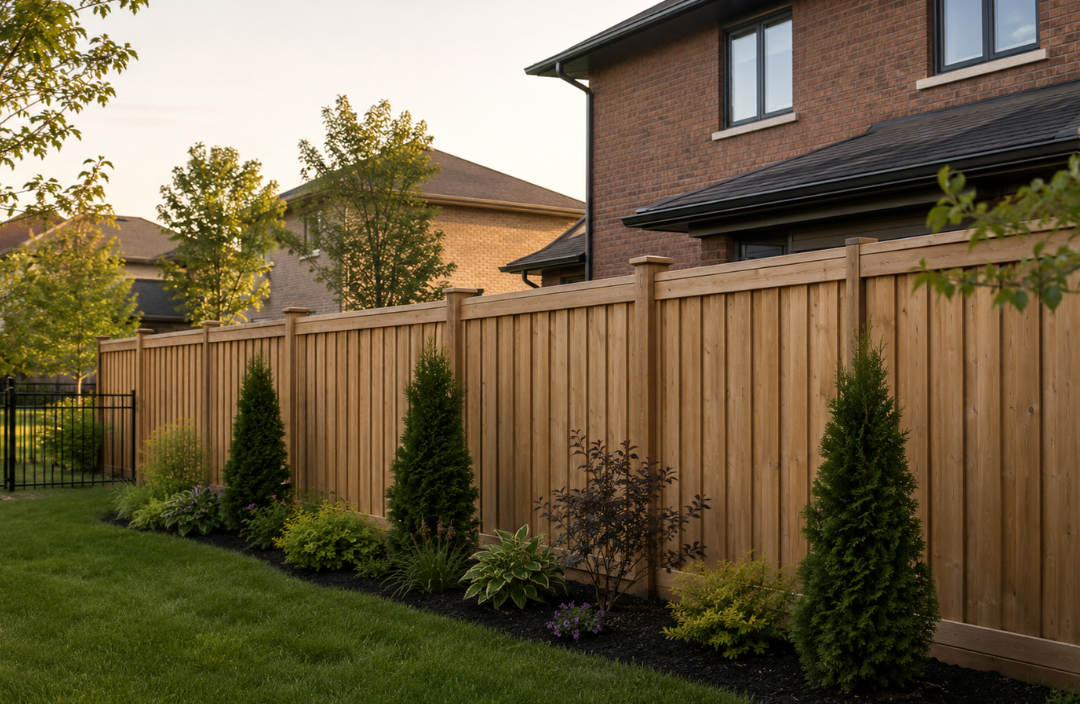
A fence can do a lot more than mark your property line. It can give you more privacy, improve security, keep children or pets safe, and add to your home’s curb appeal. The right fence can even make your property more appealing when it’s time to sell.
Before you start shopping for materials, it’s worth thinking about what you want your fence to do. A fence that’s perfect for one homeowner may not be the right fit for another.
Start with the Purpose
Start by deciding what you want your fence to accomplish. Some homeowners want more privacy, while others are focused on keeping children or pets safely in the yard. You may simply want to define your property, improve security, or give your home a more finished look. Once you know the main purpose, choosing the right style and material becomes much easier.
Check Local Rules First
Most municipalities have requirements for fence height, where a fence can be placed, and how close it can be to property lines or street corners. If you live in a neighborhood with a homeowners’ association or condominium corporation, there may also be rules about fence style, color, or materials. It’s also a good idea to confirm your property boundaries before construction begins. Building even a few inches onto a neighbor’s property can become an expensive problem later.
Compare Popular Fence Materials
Every fencing material has advantages and disadvantages.
Wood
Wood remains one of the most popular choices because of its natural appearance and versatility.
Pros:
- Good privacy
- Can be painted or stained
- Works with most home styles
Cons:
- Requires regular maintenance
- Can rot or warp over time
- May need repairs after harsh winters
Vinyl
Vinyl fencing has become increasingly popular with homeowners looking for a low-maintenance option.
Pros:
- Little maintenance required
- Won’t rot or rust
- Long lifespan
Cons:
- Higher upfront cost
- Limited repair options if damaged
Chain Link
Chain link is practical and affordable.
Pros:
- Lower cost
- Durable
- Great for securing pets
Cons:
- Limited privacy
- More industrial appearance
Privacy slats can improve the look while adding some screening.
Aluminum
Aluminum offers an attractive alternative to traditional wrought iron.
Pros:
- Rust resistant
- Low maintenance
- Elegant appearance
Cons:
- Doesn’t provide privacy
- Usually more expensive than chain link or wood
Think About Newfoundland Weather
Our climate can be hard on outdoor structures. Strong winds, heavy snowfall, salt air in coastal communities, and freeze-thaw cycles all affect how a fence performs over time. A fence is only as strong as what’s holding it up. Solid posts, properly installed footings, and quality hardware will do more for its lifespan than choosing the most expensive panels.
Don’t Forget Maintenance
Every fence needs some level of care. Wood fences should be inspected regularly for loose boards, rot, and peeling stain or paint. Vinyl fences usually need little more than an occasional wash. Metal fences should be checked for loose fasteners and signs of corrosion, particularly in coastal areas.
A little maintenance each year can extend the life of your investment.
Consider Your Neighbors
Shared property lines can sometimes lead to disagreements, but they’re often easy to avoid. Talk with your neighbor before construction begins to confirm where the fence will go, and if you’re both replacing the boundary fence, consider sharing the expense.
Will It Add Value?
A well-built fence can make your home more attractive to buyers, particularly families with children or pets. Privacy is also a feature many buyers actively look for. That said, the fence should complement your home. An oversized or poorly maintained fence can have the opposite effect.
The best fence isn’t necessarily the most expensive one. It’s the one that suits your property, fits your budget, and meets your long-term needs. Take time to compare materials, understand local requirements, and think about how much maintenance you’re willing to do. A little planning now can leave you with a fence you’ll be happy with for years to come.