

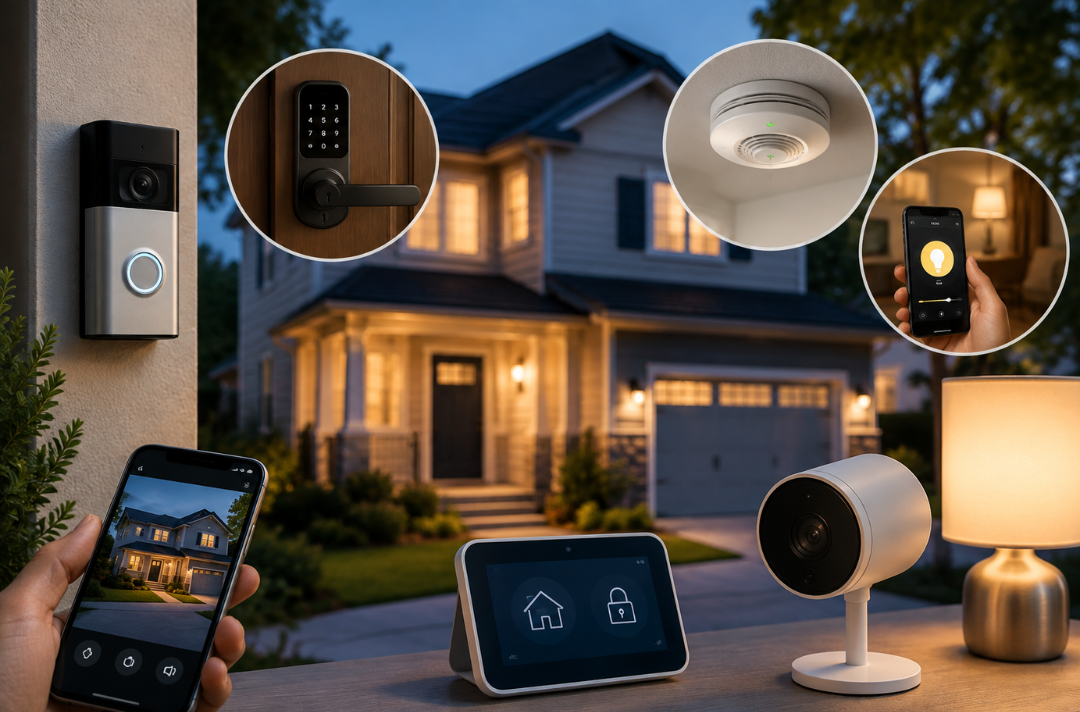
Home security has changed a lot in the last few years. You no longer need a complicated alarm system or a house full of expensive equipment to keep an eye on your property.
Today’s smart home devices can alert you when someone approaches your door, let you check your home while you’re away, and even make an empty house look occupied. Whether you own a home, are getting ready to sell, or have just purchased your first property, a few well-chosen devices can add an extra layer of security without making everyday life more complicated.
Start at the Front Door
For many homeowners, a video doorbell is one of the easiest smart security upgrades.
These devices can send an alert to your phone when someone approaches or rings the bell. Depending on the model and settings, you may be able to see live video, speak with visitors remotely and review recorded activity.
They can be particularly useful when you’re at work, travelling or simply not able to get to the door. They can also help you keep track of deliveries and see who has been around your property.
Before buying one, check whether features such as video storage require a monthly subscription.
Smart Locks Can Make Coming and Going Easier
Keys have a habit of disappearing at the worst possible time. Smart locks offer another way to control access to your home, often through a keypad, smartphone app or both.
Some models allow you to create temporary or individual access codes. That can be convenient when a family member, contractor or other trusted person needs access without being given a permanent key.
If you’re considering a smart lock, look beyond the convenience features. Choose a reputable product, use strong passwords, enable multi-factor authentication when available and keep the lock’s software updated.
It’s also worth knowing what happens if the batteries die, the internet goes down or your phone isn’t available. A reliable backup entry method matters.
Cameras Can Cover More Than the Doorstep
Outdoor security cameras can help you keep an eye on driveways, garages, sheds, side entrances and other areas that aren’t visible from your main door.
Placement matters. A camera should cover the area you actually want to monitor without unnecessarily capturing neighboring properties or private spaces.
Privacy should be part of your decision whenever you install a connected camera. Review the manufacturer’s security and privacy settings, understand how recordings are stored and know who has access to them.
Use Smart Lighting to Your Advantage
A dark house can make it obvious that nobody is home. Smart lights, plugs and switches can help change that.
Instead of leaving the same lamp on for an entire vacation, you can schedule lights to turn on and off at different times. Some systems also allow you to control lighting remotely from your phone.
Outside, motion-activated lighting can improve visibility around entrances, walkways and darker areas of your property.
You don’t necessarily need to make every light in the house “smart.” A few strategically placed lights may be enough to make your home look occupied while you’re away.
Don’t Forget the Garage
The garage can easily be overlooked when homeowners think about smart security.
Connected garage door controllers can let you check whether the door is open or closed and, depending on the system, send an alert when it operates. That can save you from wondering halfway through the workday whether you remembered to close the garage.
If your garage provides direct access to the house, securing that interior door is important too. Smart technology should complement good locks and everyday security habits, not replace them.
Smart Sensors Can Catch Problems Early
Keeping your home safe isn’t only about preventing unwanted entry.
Water leak sensors can alert you to moisture around water heaters, washing machines, sinks and other areas where a leak could cause significant damage. Smart smoke and carbon monoxide alarms may provide mobile notifications in addition to their regular alarms, depending on the model.
These devices can be especially useful when you’re away from home, but smart notifications should never replace properly installed and maintained smoke and carbon monoxide alarms required for your home.
Protect the Technology Protecting Your Home
Smart home devices are connected devices, which means digital security deserves attention too.
Start with your home Wi-Fi. Use a strong, unique password and keep your router’s software up to date. Change default passwords on smart devices, install updates when they become available and turn on multi-factor authentication for accounts that support it.
It’s also a good idea to review what information each device collects and whether you really need every feature enabled.
If You’re Selling, Keep Things Simple
Smart features can be appealing to some buyers, particularly when they’re practical and easy to understand. A smart lock, doorbell, thermostat or lighting system may be a nice addition, but don’t assume every buyer wants a fully connected home.
If smart devices are included with the property, make it clear what is staying and what is going. Before closing, the seller should remove personal accounts and data, reset devices as appropriate and make sure the new owner can take control of them.
Buyers should also ask which smart devices are included in the sale and whether any require subscriptions or additional equipment to operate.
Technology Helps, but the Basics Still Matter
A home doesn’t need to be packed with gadgets to be secure.
Good exterior lighting, properly locking doors and windows, maintained smoke and carbon monoxide alarms, secure Wi-Fi and sensible habits still matter. Smart devices work best when they add another useful layer to those basics.
Choose technology that solves a real problem in your home rather than buying devices simply because they’re “smart.” The best setup is one that you understand, maintain and actually use.