

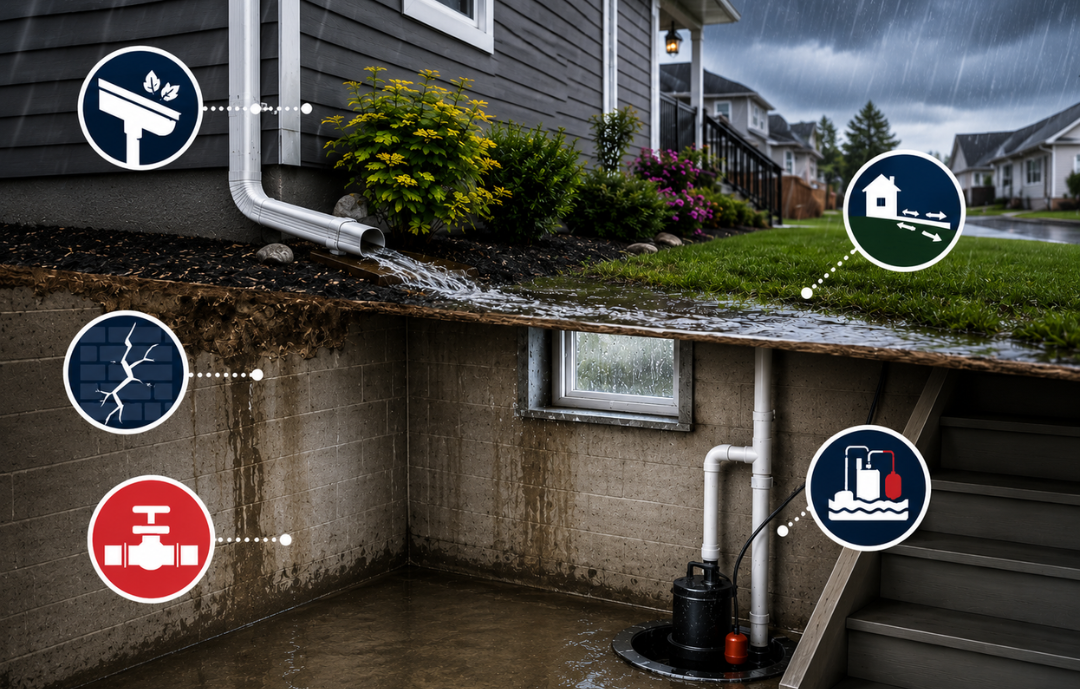
A dry basement can turn into a major headache surprisingly quickly. One intense rainfall, a blocked drain, a failed sump pump or water collecting around the foundation can lead to damaged flooring, ruined belongings and costly repairs.
You cannot eliminate every flooding risk, but there are practical things homeowners can do to make water less likely to end up in the basement. In Newfoundland and Labrador, where heavy rain, snowmelt, freeze-thaw cycles and coastal weather can all put drainage systems to the test, a little prevention is well worth the effort.
Start Outside the House
One of the simplest places to start is with your gutters and downspouts.
Leaves, debris and ice can prevent gutters from carrying water away properly. When they overflow, water can collect beside the foundation instead. Clean gutters regularly and check that downspouts are securely connected and directing water away from the house.
After a heavy rainfall, check around your home for areas where water is pooling or collecting near the foundation. Pay attention to the direction the water is flowing as well. Proper grading should direct water away from the house, helping reduce the amount of moisture that can build up around the foundation and potentially make its way into the basement.
Low spots can develop over time as soil settles. Correcting the grading around the foundation may help reduce the amount of water collecting against basement walls.
Check Your Foundation for Trouble Spots
Small foundation cracks do not automatically mean a basement is going to flood, but they should not be ignored.
Look around both the exterior and interior of the basement for visible cracks, damp areas, water stains, peeling paint, efflorescence or signs that moisture is getting inside.
Some cracks can be relatively minor, while others may require professional assessment and repair. If a crack is growing, repeatedly leaking or accompanied by other signs of movement, have it evaluated rather than simply covering it up.
Basement windows deserve attention too. Window wells can collect rainwater and melting snow if they are clogged or poorly drained. Keep them clear of leaves and debris, and check that covers, drainage and seals are in good condition.
Don’t Wait Until a Storm to Test the Sump Pump
If your home has a sump pump, it needs to work when you need it most.
Check it periodically and make sure the pit is free of debris. You should also know where the discharge line sends the water. Pumping water out of the basement does little good if it is discharged beside the foundation and finds its way back in.
Power outages can happen during severe weather, which is exactly when a sump pump may be working hardest. Depending on your property and flooding risk, a battery backup or another suitable backup system may be worth considering.
If you are unsure whether your sump pump is operating properly, have it inspected before the next major rainfall rather than discovering a problem during one.
Understand the Risk of Sewer Backup
Not all basement flooding comes through foundation walls. Water or sewage can sometimes back up through basement plumbing when drainage or sewer systems are overwhelmed or obstructed.
A backwater valve can provide an extra layer of protection against sewer backups by helping stop wastewater from coming back into your home. Not every property will require one, so speak with a qualified professional who can look at your plumbing system and determine whether a backwater valve makes sense for your home.
If your home already has a backwater valve, do not assume it is maintenance-free. It should remain accessible and be checked and maintained as recommended.
Pay Attention to the Warning Signs
Basements often give homeowners clues before a serious water problem develops.
A persistent musty smell, recurring dampness, staining near the floor, water appearing after heavy rain or unexplained moisture around basement walls deserves attention. The same applies if a sump pump suddenly seems to be running much more frequently than usual.
Finding the source early can make the difference between a manageable repair and a much larger cleanup.
It is also smart to keep valuable or difficult-to-replace belongings off the basement floor. Important documents, photographs, electronics and other vulnerable items are safer on shelving or stored in water-resistant containers.
Know What Your Insurance Covers
Home insurance coverage for water damage can vary significantly.
Do not assume every type of basement flooding is automatically covered. Sewer backup, overland flooding and other sources of water damage may be treated differently depending on the insurer and policy.
Review your coverage and ask your insurance provider what protection you currently have, what exclusions apply and whether additional water-related coverage is available. It is much better to understand your policy before you need to make a claim.
A Little Maintenance Can Prevent a Much Bigger Problem
Basement flood prevention is not one big project. In many homes, it is a collection of smaller jobs: cleaning gutters, extending downspouts, improving drainage, checking foundation cracks, maintaining the sump pump and paying attention when moisture appears.
Make those checks part of your regular home maintenance, particularly before seasons when heavy rain or rapid snowmelt are more likely.
And if you are buying a home with a basement, look beyond the finished flooring and freshly painted walls. Ask about previous water issues, look for signs of moisture, understand the property’s drainage and make sure the home inspection includes a careful look at the basement and visible water-management systems.
Preventing every possible flood may not be realistic. Reducing the risk usually is.