

Most homeowners don’t think much about drainage until something goes wrong.
A puddle that never seems to dry. Water running toward the house every time it rains. A soggy lawn that makes mowing impossible. These might seem like small annoyances, but they’re often early warning signs that water isn’t draining where it should.
Over time, excess water can damage landscaping, kill grass, attract mosquitoes, stain foundations and, in some cases, lead to expensive structural repairs. Fortunately, many drainage problems can be corrected before they become major headaches.
Start by Finding the Problem
The first step is simply paying attention to what happens after it rains. Walk around your yard and look for puddles that linger, soft or muddy patches, water collecting near the foundation, or downspouts that empty too close to the house. Small clues like these often point to the source of the problem and can help determine the best solution.
Check Your Gutters and Downspouts First
One of the most common causes of drainage problems starts on the roof.
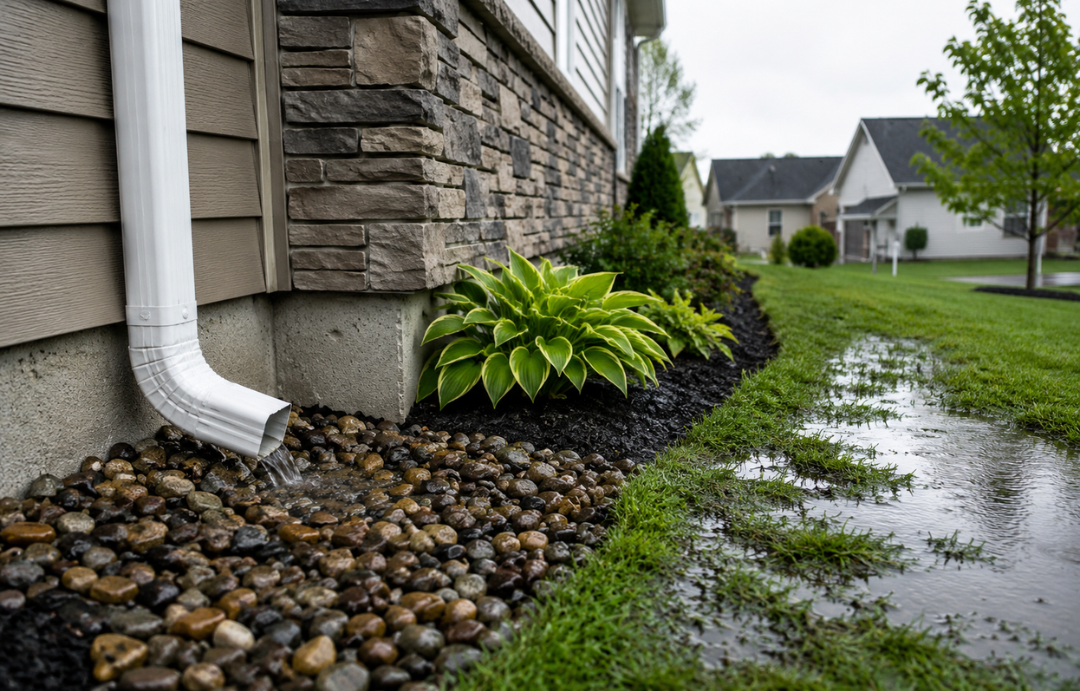
If gutters are clogged or downspouts discharge water right beside the house, every rainfall sends hundreds of litres of water directly toward the foundation. Keeping gutters clean and extending downspouts several feet away from the home can significantly reduce the amount of water collecting around the foundation.
Make Sure the Ground Slopes Away from the House
The soil around your home should gently slope away from the foundation.
Over the years, soil naturally settles. When that happens, rainwater may begin flowing toward the house instead of away from it. Adding soil to low areas and restoring a gradual slope is often enough to solve minor drainage issues before they become costly repairs.
When a French Drain Makes Sense
If water consistently pools in one area or groundwater remains a problem despite improving grading, a French drain may be worth considering.
A French drain is an underground system consisting of a gravel-filled trench with a perforated pipe that collects excess water and carries it safely away from your home. Because it relies on gravity, the trench must be properly sloped and the water must discharge to a suitable location.
While experienced DIY homeowners may be able to install one, the project requires careful planning, excavation, and attention to local utility locations before digging begins.
Signs Your Property May Need Better Drainage
Watch for these common warning signs:
- Standing water that remains for 24 hours or longer after rain.
- Wet or muddy areas that never seem to dry.
- Water stains or damp spots in the basement.
- Soil washing away after storms.
- Foundation cracks or shifting patios.
- Moss growing where grass struggles.
- Mosquitoes gathering around stagnant water.
Catching these problems early can prevent much larger repairs later.
Other Drainage Solutions
Not every property needs a French drain. Depending on the situation, one or more of these options may solve the problem:
- Extend downspouts farther from the house.
- Install catch basins or surface drains in low spots.
- Create shallow drainage channels that naturally guide water away from problem areas.
- Build a rain garden to absorb runoff naturally.
- Regrade portions of the lawn to improve water flow.
- Install a dry well where appropriate to collect excess runoff.
The right solution depends on where the water is coming from and how much needs to be managed.
Don’t Forget Underground Utilities
Before digging any trench, even on your own property, underground utilities must be located.
Water lines, gas lines, electrical cables, communications infrastructure and other buried services can all be damaged during excavation. Having utilities marked beforehand is an important safety step and may be required before any digging begins.
Drainage Helps Protect Property Value
A dry property is easier to maintain, more enjoyable to use, and far more attractive to potential buyers.
Standing water, foundation concerns and poor grading are issues that often appear during home inspections. Addressing drainage problems before selling not only helps protect your investment but can also make the inspection process much smoother.
Water always follows the easiest path. The goal is making sure that path leads away from your home—not toward it.