

If a pipe burst tonight, would you know where to shut off the water? If the power went out, could you find a flashlight without using your phone?
Preparing for home emergencies starts with knowing your house and having a few supplies within reach. Here’s where to focus.
Find the shutoffs before there’s a problem
Locate your main water shutoff and electrical panel. Label them clearly, keep access clear, and make sure other adults in the home know where they are.
If you don’t know how to shut off your water, ask a plumber to show you. For heating equipment, ask your service provider which emergency instructions apply to your system. Keep those instructions with your emergency contacts. Canada’s household emergency plan includes space to record these details.
Buying a home? Add this walkthrough to your move-in list. Selling? Leave the next owner labelled shutoffs, equipment manuals and service information.
Pack for three days without regular services
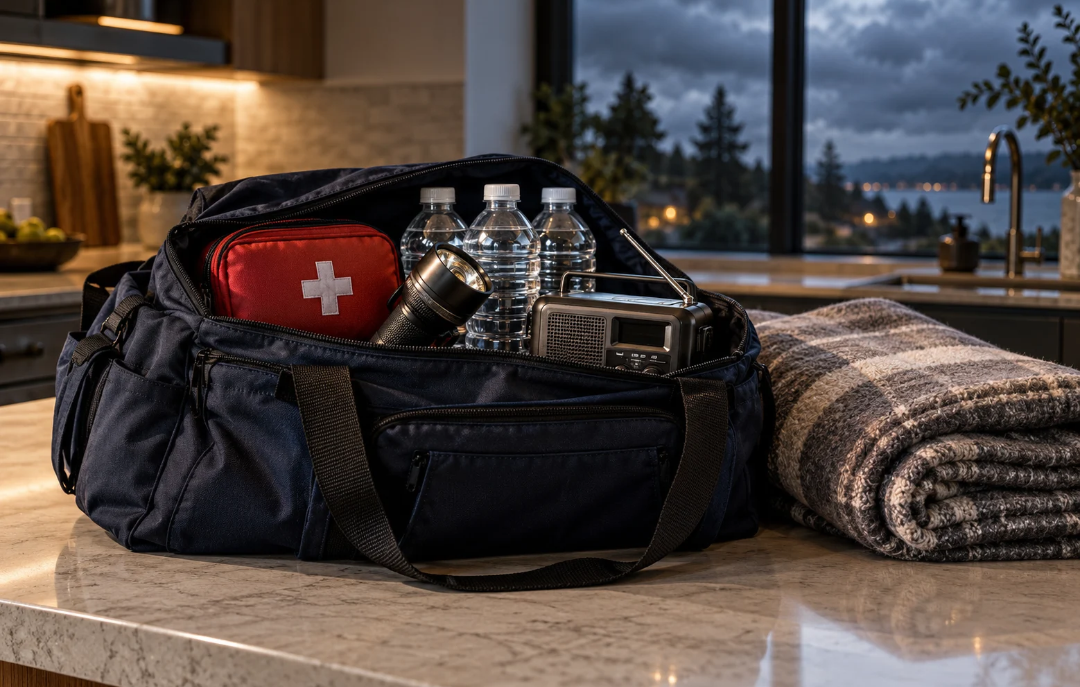
It is recommended to have enough supplies for at least 72 hours. Keep them together somewhere accessible, with a bag you can take if you need to leave.
Start with:
- Drinking water and food that doesn’t need refrigeration.
- A manual can opener.
- Flashlights, spare batteries and a battery-powered or wind-up radio.
- A charged power bank and phone cable.
- A first aid kit, medications and personal supplies.
- Warm clothing, blankets and some cash.
- Food, water and other supplies for pets.
Adjust the kit for your household, including babies, mobility needs and medical equipment. Check it in spring and fall, replacing expired supplies and updating documents.
When stocking water, plan for drinking, cooking and cleaning. Health Canada recommends two liters per person per day and suggests keeping another two liters for cooking and cleaning. Have at least three days’ worth on hand, plus extra for pets.
Decide how everyone will get out
Talk through escape routes, including a second way out of each room where possible. Choose a meeting place outside and another beyond your immediate neighborhood.
Include anyone who may need help leaving, and decide who will handle pets. Choose an out-of-town contact everyone can check in with if household members are separated. Write the plan down so it’s available without a charged phone.
Test smoke and carbon monoxide alarms monthly, and replace them according to the manufacturer’s instructions.
Know when to leave the problem alone
A flooded basement is not a place to start rescuing belongings. Do not enter if water may have reached outlets, heaters, electrical equipment or extension cords. If the area is wet or you’re unsure, stay out and contact a qualified electrician about disconnecting power.
A generator also needs a plan before an outage. Operate it outdoors, away from doors, windows and vents—never in a garage or another enclosed or partly enclosed space. Never plug a generator into a wall outlet. Have a qualified electrician arrange a proper connection if you want it to supply your home’s wiring.
Start today by finding your water shutoff, testing your alarms and putting a flashlight somewhere easy to reach. Then build the rest of your supplies and plan around the people who live in your home.
This article provides general information and does not replace advice from emergency officials, utility providers or qualified professionals. Follow local alerts, evacuation orders and instructions for your home’s equipment. In an emergency, put personal safety first and call 911 if immediate help is needed.