

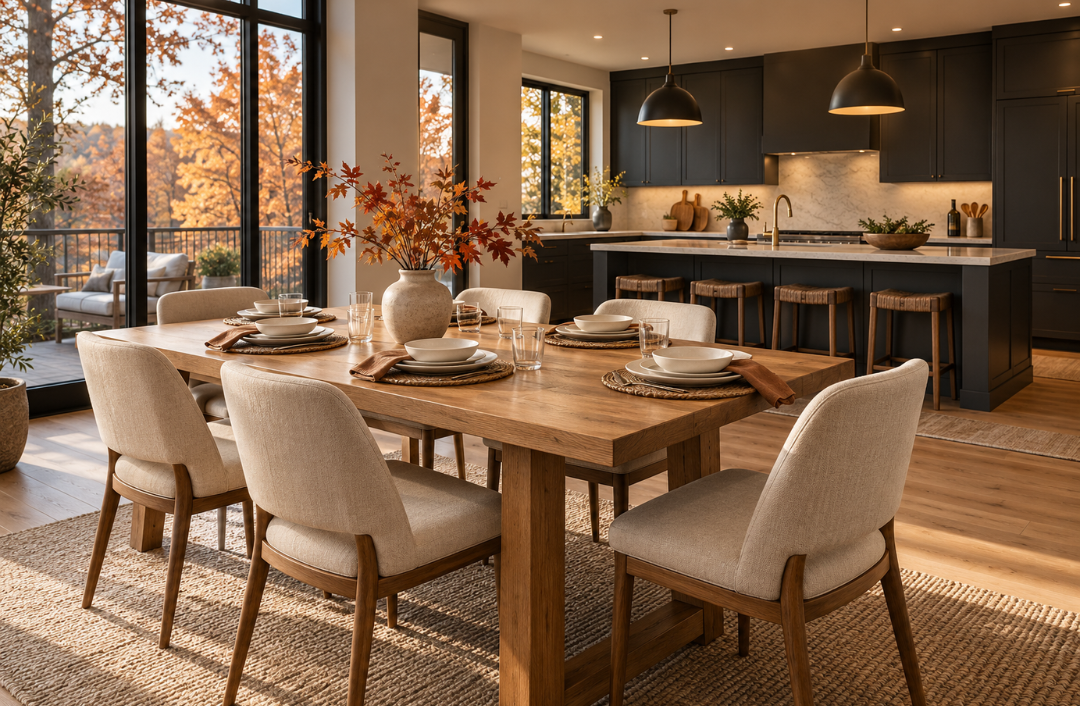
Six people arrive at once. It’s raining. Everyone has a coat, someone is carrying dessert, and the oven timer starts ringing.
That’s when you find out how well a home works for entertaining.
When you’re house hunting, look past the dining room staged for four and the spotless kitchen island. Think about the gatherings you actually host: Sunday supper, a hockey night with friends or a holiday meal with family. Then walk through the home as if those guests were coming over.
Make room for a proper welcome
A few guests arriving together can quickly fill an entrance with coats, wet boots and umbrellas. Look for enough space to remove footwear and hang jackets while leaving a clear path into the home.
A nearby closet, space for a boot tray and a small bench can make arrivals easier. Check that the front door can open fully while someone is using the space.
Follow the traffic through the kitchen
A large kitchen can still be awkward when guests gather in the wrong spot.
During a showing, check whether someone could open the fridge while another person loads the dishwasher. Would guests sitting at the island be in the way when you carry a hot dish to the table?
Look for counter space near the oven and a place to serve food away from the main cooking area. A separate spot for drinks can keep people from gathering around the sink.
Ask about the range hood, too. Health Canada advises using a range hood exhaust fan while cooking to reduce cooking-related pollutants and water vapour. Ventilation deserves attention alongside the appliances and finishes.
An open layout may suit you if you like chatting while cooking. A separate kitchen may be a better fit if you prefer to leave the dishes out of sight. Choose based on how you host.
Measure for people, not just furniture
A dining table fitting into a room is only half the test. Guests also need room to pull out chairs, sit comfortably and walk behind them.
Bring your table measurements to a showing. If you use an extension leaf, measure the table at its full length. Check the space between it and nearby walls, cabinets or doorways.
In the living room, consider where everyone would sit. Is there room for an extra chair without blocking the route to the bathroom? Can people talk comfortably, or would they be spread across opposite ends of the room?
Useful space matters more than the total square footage on the listing.
Look at how the home feels in the evening
With shorter fall days, lighting matters when guests come over. Look for a well-lit entrance, good lighting over the table and softer options in the living room. Lamps and dimmers let you adjust the light as dinner turns into an evening of conversation.
Ask about the heating system, recent servicing and available energy bills. Those bills can provide context, although your costs will depend on your usage, energy rates and other factors. If the seller has an EnerGuide evaluation, ask to see it; these evaluations assess how a home uses energy and identify possible improvements.
Also consider the guests you host regularly. A bathroom on the main floor and a manageable entrance may matter much more than a finished basement if someone finds stairs difficult.
A deck or backyard is a bonus on a mild fall evening. Still, check that everyone could move indoors comfortably if the weather changes.
If you’re preparing to sell, help buyers picture themselves hosting. Keep the entrance tidy, give dining chairs room to pull out and arrange living room seating for easy conversation. Keep fall décor simple so buyers can see how much usable space each room offers.
Already own your home? Try moving the drinks station out of the kitchen, adding coat hooks or rearranging a chair before planning a renovation.
At your next showing, trace one guest’s route: through the door, to the coat storage, over to the table and into the living room. If that route works with chairs pulled out and people gathered around, you’ve learned something the listing photos can’t tell you.