

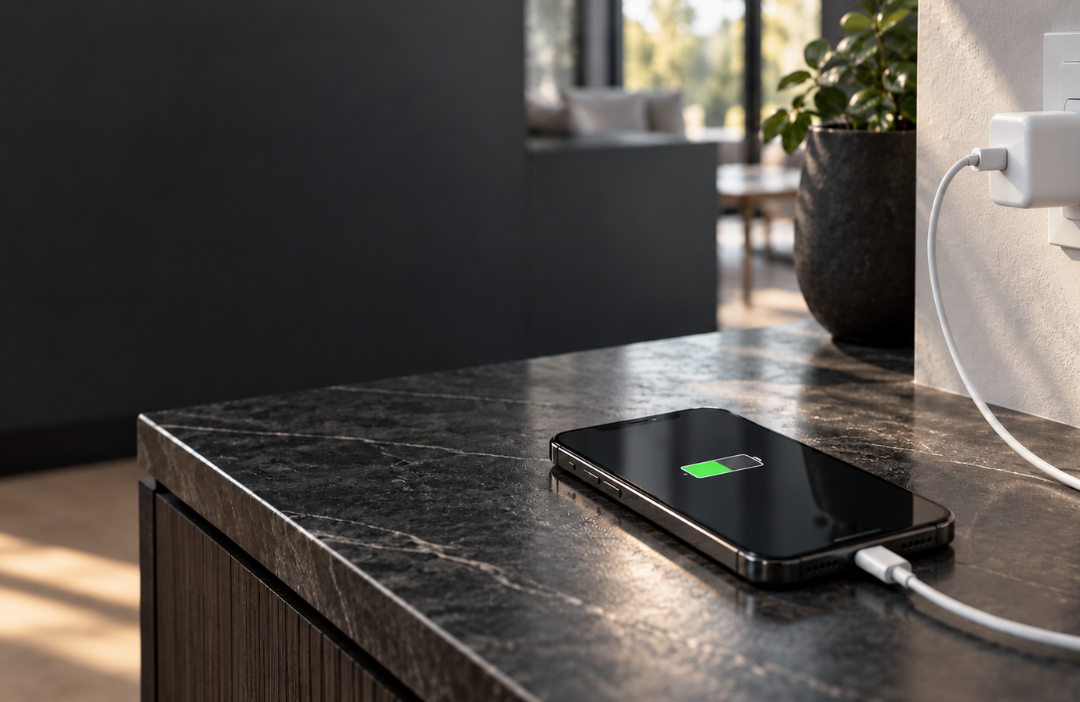
A phone charging under a pillow. A drill battery plugged in beside paint supplies. An e-bike charging near the front door. These are easy details to overlook when thinking about home safety.
Newfoundland and Labrador’s October 5 announcement for Fire Prevention Week, observed October 4–10, 2026, puts safe charging habits in the spotlight. The focus is lithium-ion batteries—the rechargeable batteries found in phones, laptops, power tools and e-bikes.
For homeowners and buyers, the useful question is simple: where can these devices charge safely without putting the way out at risk?
Give charging a proper place
Use a hard, flat surface and keep the device uncovered. Beds, couches and pillows can trap heat around a charging battery. Keep paper, clothing and other materials that can burn away from the charging area.
Use the cord and charger supplied with the device, or a replacement approved by its manufacturer. A connector that fits is not enough to confirm compatibility. Health Canada also recommends chargers with a recognized Canadian certification mark, such as CSA, cUL or cETL.
Charge where you can see the device, while you are awake and able to notice a problem. Unplug it when charging is complete rather than leaving it connected overnight.
Keep the front door clear—and watch the temperature
An entryway may be a convenient place to park an e-bike, but charging equipment should never block an exit. Keep hallways, stairs and doorways clear.
The provincial announcement recommends charging larger items, including e-bikes, scooters and power tools, outside when possible. In Newfoundland and Labrador, temperature and moisture need attention too.
Health Canada says to bring larger lithium-ion batteries to room temperature before use and not to charge them below 0°C. Follow the manufacturer’s instructions and choose a dry, suitable location. An unheated shed or garage may be too cold for charging.
Know when to stop
Stop using or charging a device if its battery swells, leaks, becomes unusually hot, smells strange or makes popping or hissing sounds. Do not try to repair or puncture the battery.
If it is hot, hissing, smoking, sparking or burning, do not touch or carry it outside. Leave the area, alert others and call 911 from a safe location. Close the door behind you if possible and do not re-enter.
Clear out old batteries properly
Lithium-ion batteries do not belong in household garbage or regular curbside recycling.
Use the Recycle Your Batteries, Canada! postal-code locator to look for a collection site, then confirm that it accepts your battery type. Check with your municipality if you need further disposal guidance.
A swollen, leaking, damaged or recalled battery needs special handling. Contact the manufacturer or collection site before transporting it; do not put it into a regular battery collection box.
Buying, selling or moving?
Add charging locations to your moving checklist. Before unpacking electronics or setting up a tool bench, choose a suitable surface, check the chargers and keep escape routes clear.
If you are preparing a home for showings, check the charging spots as you tidy. Keep devices uncovered and away from curtains, bedding and stored supplies. Choose their location for safety, even if another spot would look neater.
Start with the devices already plugged in today. Check the surface, the charger and the nearest exit.
Helpful resources:
- NL Government: Fire Prevention Week 2026 announcement
- Health Canada: Lithium-ion battery safety
- Recycle Your Electronics, Canada!: Find a drop-off location
Accuracy note: No individual NL depot’s acceptance rules or hours have been confirmed. Readers should check before visiting.