

You spend an afternoon planting your garden. Everything looks great. A few days later, something has eaten the lettuce, dug up the tulips, or helped itself to the strawberries. It’s a familiar story for many homeowners.
The good news is that you don’t have to give up on gardening. A few small changes can make your yard much less appealing to hungry visitors without causing them any harm.
One of the biggest mistakes people make is trying to solve every problem the same way. Before you buy fencing or repellents, take a close look at the damage. Rabbits usually leave clean-cut stems close to the ground. Slugs chew irregular holes through leaves. Squirrels tend to dig small holes in garden beds, while birds often go straight for berries and tomatoes just before they’re ready to pick. Knowing what’s visiting your garden saves a lot of trial and error.
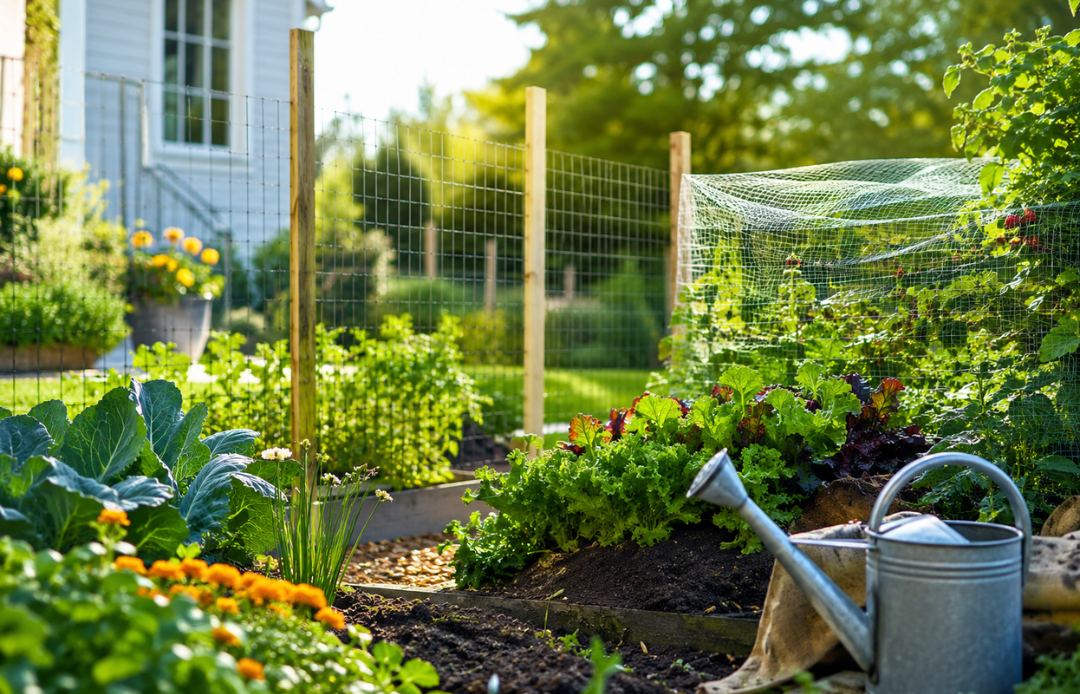
If you’ve put time into growing vegetables, it’s worth giving them a little protection. A basic wire fence is often enough to keep rabbits from wandering into the garden, and it doesn’t need to be fancy to do the job.
If berries are disappearing before you get a chance to pick them, covering the plants with lightweight netting is one of the simplest ways to stay a step ahead of hungry birds. It may not be the prettiest solution, but it can save a lot of frustration.
It’s also worth taking a quick look around your yard every now and then. Fruit that’s fallen from trees, open compost bins, bags of garbage, or brush piles can all attract curious visitors looking for an easy meal or a place to hide. Keeping those areas clean won’t stop every animal from dropping by, but it gives them fewer reasons to stick around.
You can make your garden a little less inviting by mixing in strongly scented herbs. Lavender, chives, rosemary, sage, and mint aren’t magic solutions, but many gardeners find they help discourage some visitors while adding color and fragrance to the yard. As a bonus, they’re useful in the kitchen too.
Wet weather creates the perfect conditions for slugs, so they’re often most active after a rainy stretch. While you can’t control the weather, you can avoid adding more moisture by watering early in the day instead of at night. It won’t eliminate slugs completely, but it can help reduce the damage they leave behind.
Birds are a little trickier. Once they discover your berry patch, they’re hard to fool for long. Reflective tape, pinwheels, and similar deterrents work best if you move them around every so often. Leave them in the same spot all season, and the birds quickly learn there’s nothing to worry about.
If you’ve planted young trees or shrubs, they’re worth protecting too. In some parts of Newfoundland, rabbits and even moose can do a surprising amount of damage, especially during the colder months when food is harder to find. Tree guards are inexpensive compared to replacing a tree that’s been stripped of its bark.
One thing that’s easy to overlook is the condition of the plants themselves. Healthy plants can usually handle a little nibbling and recover without much trouble. Plants that are already stressed from too much water, too little sun, or poor soil don’t bounce back nearly as well. Keeping your garden healthy is one of the simplest forms of pest prevention.
No garden is ever going to be completely untouched. That’s part of living somewhere with plenty of wildlife. The goal isn’t to keep every animal away. It’s to make your garden just difficult enough that they’ll decide to find dinner somewhere else, leaving you with more flowers to enjoy and more vegetables to bring into the kitchen.