

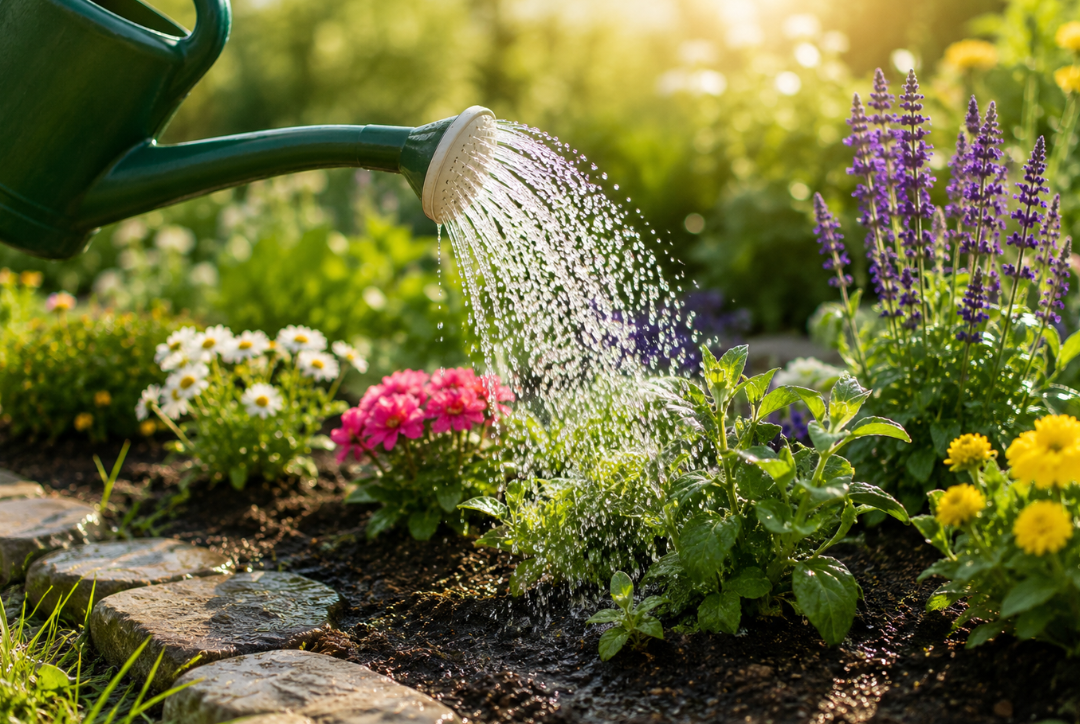
Many gardeners assume watering your garden is simple. Turn on the hose, soak the plants, and you’re done. In reality, too much water can be just as harmful as too little.
The best garden watering tips focus on giving plants the right amount of water at the right time. When you understand how often to water plants and how to water efficiently, you’ll help roots grow deeper and keep your garden healthier through dry periods.
How Often Should You Water Plants?
There is no single watering schedule that works for every garden.
How often to water plants depends on several factors, including:
- The type of plant
- Soil conditions
- Temperature and rainfall
- Wind exposure
- Plant age
Newly planted trees, shrubs, flowers, and vegetables usually need water more often while they establish roots. Established plants can typically go longer between watering. Instead of watering every day, check the soil first. Insert your finger about 5 to 8 centimetres into the soil. If it feels dry at that depth, it’s time to water. If it’s still moist, wait another day or two.
Water Deeply, Not Frequently
One of the most common mistakes is applying a small amount of water every day. Light watering encourages shallow roots that struggle during hot weather. Deep watering allows moisture to reach further into the soil, encouraging stronger root systems.
When watering your garden, soak the soil thoroughly rather than giving plants a quick spray. Deep watering once or twice a week is often more effective than daily watering for established plants.
The Best Time to Water Your Garden
Morning is usually the best time to water. Watering early allows moisture to soak into the soil before temperatures rise. It also gives leaves time to dry during the day, which can help reduce disease problems. If morning isn’t possible, late afternoon or early evening is the next best option.
Avoid watering during the hottest part of the day. Much of the water can evaporate before reaching plant roots.
Pay Attention to Container Plants
Potted plants dry out much faster than plants growing in the ground. During warm weather, containers may need watering every day. Small pots and hanging baskets often require even more attention, especially during hot, windy conditions. Check containers regularly and water when the top few centimetres of soil feel dry.
Use Mulch to Hold Moisture
If you’re finding yourself watering frequently, mulch can help. It acts as a barrier that reduces moisture loss from the soil while also helping to suppress weeds. Materials such as shredded bark, wood chips, straw, or compost work well in most gardens. For best results, keep mulch a few centimetres away from plant stems and tree trunks.
Water the Soil, Not the Leaves
When watering your garden, concentrate on soaking the soil around each plant. This encourages roots to grow deeper and makes better use of the water you apply.
Soaker hoses and drip irrigation systems are useful because they deliver water directly to the soil while minimizing evaporation.
Watch for Signs of Overwatering
Many gardeners worry about underwatering but overlook the effects of too much moisture.
Signs of overwatering can include:
- Yellowing leaves
- Wilting despite wet soil
- Soft stems
- Slow growth
- Root rot
If the soil remains wet for long periods, reduce watering and improve drainage if necessary.
Let Weather Guide Your Schedule
Rainfall should always influence your watering routine. After a soaking rain, you may not need to water for several days. During hot, dry spells, plants may need additional attention. Rather than following a strict schedule, monitor soil moisture and adjust as conditions change.
Watering your garden isn’t about sticking to a calendar. The best approach is to monitor soil moisture, watch the weather, and respond to your plants’ needs. A little attention can help prevent common watering mistakes and keep your garden growing well all season long.