

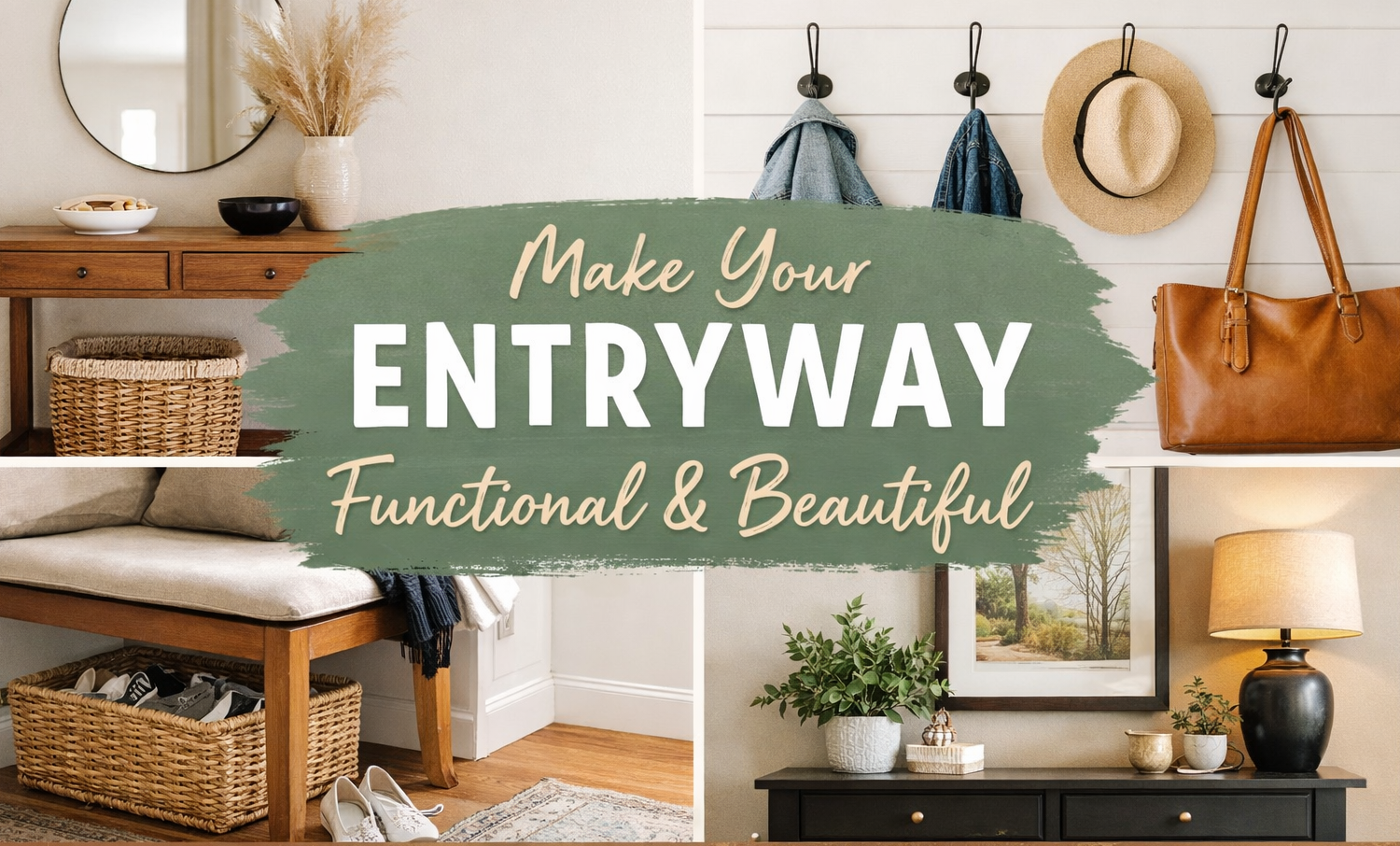
Entryways get messy fast. The goal isn’t to eliminate clutter—it’s to control it. Try to use baskets or bins for shoes, especially in busy households. Add a tray or small dish for keys, wallets, and sunglasses. Use a slim console table with drawers to tuck away small items. Everything should have a “home.” If it doesn’t, it ends up on the floor.
Hooks Are Your Best Friend
If you do one thing, add hooks. They save space, keep coats off chairs, and make it easy to grab and go. Go for sturdy wall hooks or a mounted rail. If you have kids, install a lower row so they can hang up their own stuff (in theory, at least).
Add a Mirror (It Does More Than You Think)
A mirror is one of the easiest upgrades with the biggest impact. It makes small entryways feel bigger, it reflects light and brightens the space, and it gives you a quick check before heading out! Go simple with a round mirror, or make a statement with something bold—keep it proportional to your space.
Don’t Skip Seating (If You Have Room)
A small bench or stool can make your entryway much more functional. It gives you a place to sit while putting on shoes, extra storage underneath (hello, baskets again) and provides a more welcoming, finished look. If space is tight, look for a narrow bench or even a small chair tucked into a corner.
Layer in Style (This Is Where It Gets Fun)
Once the basics are covered, you can make it feel like you. Add a piece of art or framed print and a small plant or some greenery. A runner or durable rug, along with a lamp for soft lighting, can turn your entryway from “just a drop zone” into a space that feels intentional.
Think About Flow
A beautiful entryway that blocks the door or feels cramped won’t work. Keep pathways clear and avoid bulky furniture in tight spaces. Choose pieces that fit the scale of your entryway and make sure doors can open fully. Function always comes first—style should support it, not fight it.
Keep It Easy to Maintain
The best entryway setup is one you can keep tidy without effort. That means not overloading the space with décor and choosing storage that’s easy to use. Do a quick reset daily (takes two minutes) – if it’s too complicated, it won’t last.
Your entryway doesn’t have to be big or fancy to work well. It just needs to support your daily routine and feel welcoming when you walk in the door. Start simple. Add what you need. Then layer in the details that make it feel like home. Because at the end of the day, the best entryway is one that works for real life—not just for photos.