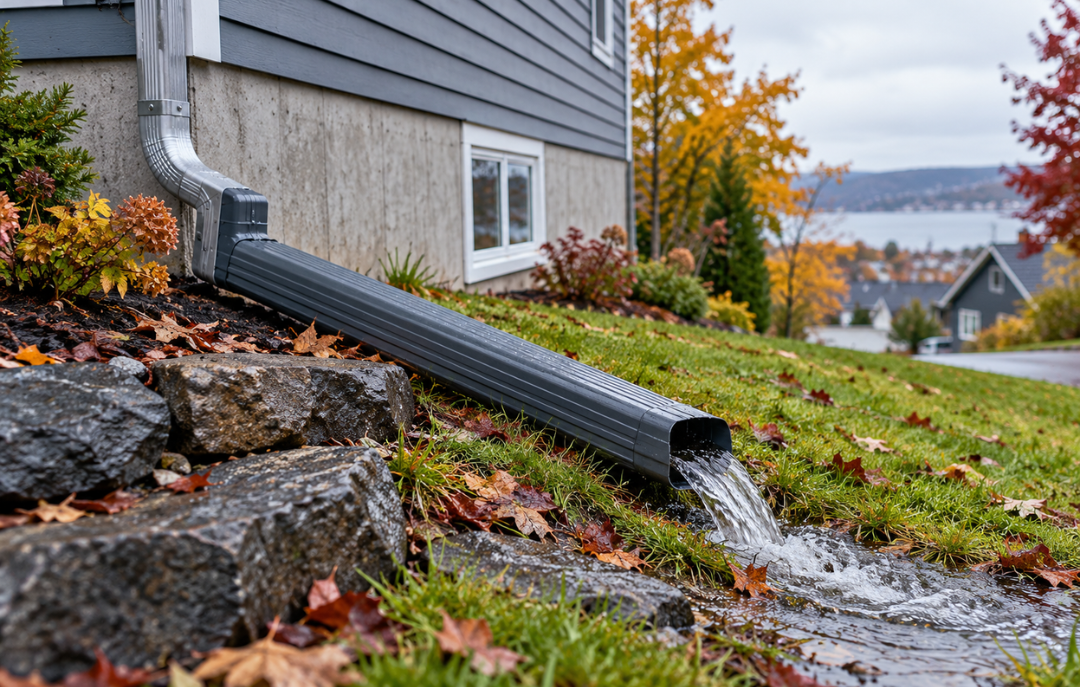
Fall is when your house tells you what it’s been up to
A damp patch under a basement window or water pooling beside the house is easy to overlook once it dries. After the next heavy rain, take a few minutes to check outside and in the basement. You’ll have a better chance of spotting a drainage problem while you can still see where the water is going.
Check the gutters and downspouts
Watch for gutters overflowing, joints leaking, or downspouts emptying right beside the foundation. Leaves and twigs can block the flow, especially in fall.
The Government of Canada recommends checking gutters and downspouts in spring and fall, and after major storms. Downspout extensions should carry water at least two meters from the foundation onto ground that drains well, without directing it toward neighboring properties.
If cleaning or repairs require working at height, hire someone with the right equipment.
Pay attention to puddles near the house
If water collects against the foundation whenever it rains, have it checked. The same goes for ground that stays soggy after the rest of the yard has dried, or runoff flowing toward a basement entrance or garage.
The cause could be a low spot in the yard, a blocked drain, or another drainage issue. Before paying for repairs, have a qualified contractor identify where the water is coming from and why it’s collecting there.
Look around basement windows
Remove any leaves or debris from your window wells and check for standing water. Check the window frames for cracks or gaps. After a rainfall, look inside for dampness around or below the windows.
Government guidance recommends inspecting basement windows annually and more often during wet weather. If a window well continues to fill after you’ve cleared it, arrange an inspection to find out why it isn’t draining.
Check the basement after rain
Look along exterior walls and beneath windows for damp patches, peeling paint, or discoloration. These can be signs of a moisture problem, though an inspection may be needed to determine the cause.
If you notice dampness, take a photo and jot down the date and how much it rained. A contractor may find it useful to know whether the area gets wet after light rain or only during a downpour. If you’ve had a foundation crack repaired, check that spot for moisture after heavy rain and when the snow melts.
If you have a sump pump, test it according to the manufacturer’s instructions and check that the discharge line is clear. Ask a plumber about a suitable backup system in case the power goes out.
Buying or selling this fall?
If you’re buying, ask your home inspector about drainage, window wells, moisture marks, and where the downspouts discharge. Ask about previous water problems and repairs as well. A basement can be dry during a showing and still have a history of leaks.
If you’re getting ready to sell, find out what’s causing any dampness before you paint over it. Save the receipts and reports from repairs so you have a record of the problem and how it was addressed.
Before winter, clear any leaves or debris you can safely reach and check around the house after rain. Make a note of standing water or damp spots in the basement. If they keep coming back, have a qualified contractor check the cause.