

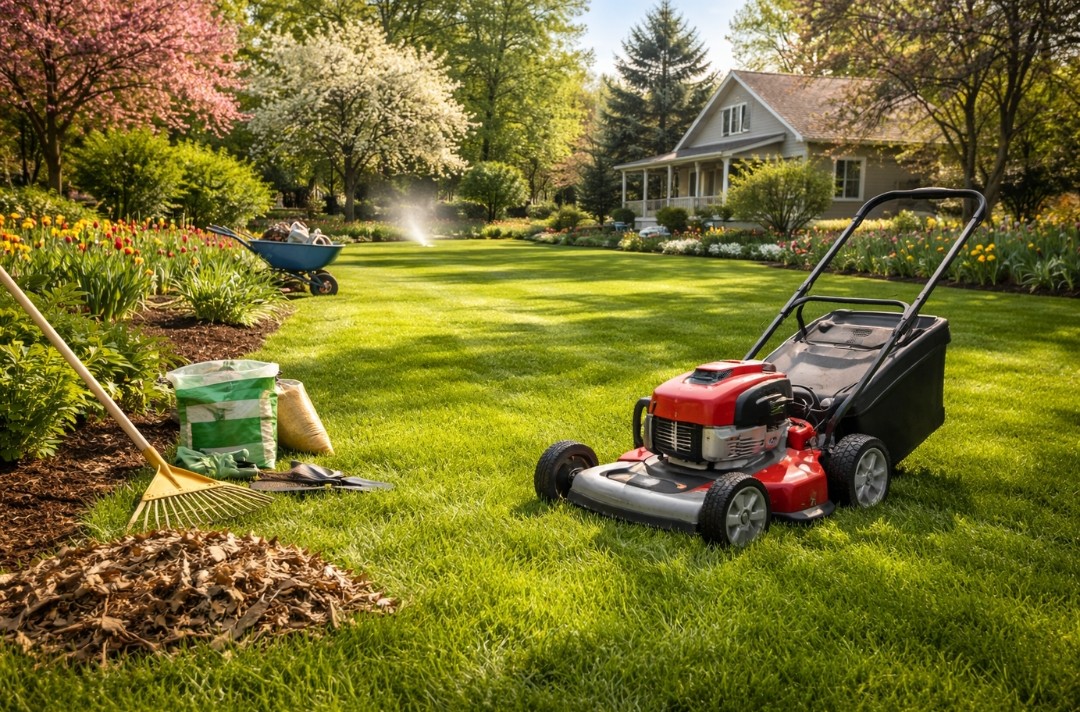
After months of cold weather, your lawn needs a bit of attention to bounce back. The good news? You don’t need fancy equipment or a landscaping crew to get results. With a few simple steps, you can set your lawn up for a healthy, green season.
Here’s how to get your lawn spring-ready.
Start with a Clean-Up
Before anything else, clear away what winter left behind. Fallen branches, leftover leaves, and debris can block sunlight and trap moisture, which leads to mold or patchy growth.
Take a rake and gently remove debris. If the grass is still soft or soggy, avoid heavy raking—wait until the ground firms up to prevent damage.
Assess the Damage
Once your lawn is clear, take a walk around and look for:
- Bare or thin patches
- Snow mold or discolored areas
- Compacted soil from foot traffic
This step helps you decide what your lawn actually needs instead of guessing.
Gently Rake to Loosen the Grass
Light raking helps lift matted grass and improves airflow. This encourages new growth and prevents disease.
Use a soft rake and avoid digging into the soil. The goal is to fluff up the lawn, not tear it apart.
Aerate if Needed
If your soil feels hard or water tends to pool, it’s likely compacted. Aeration helps loosen the soil so air, water, and nutrients can reach the roots.
You can use a manual aerator or hire a service. Focus on high-traffic areas where compaction is worst.
Overseed Bare Spots
Spring is a great time to fill in thin or patchy areas.
- Choose a grass seed that matches your existing lawn
- Spread it evenly over bare spots
- Lightly rake the area to help seeds settle into the soil
Keep the soil consistently moist until new grass starts to grow.
Apply Fertilizer at the Right Time
Your lawn needs nutrients to recover and grow. A slow-release fertilizer works best in early spring.
Don’t rush this step—wait until your lawn has started actively growing. Applying fertilizer too early can do more harm than good.
Control Weeds Early
Weeds compete with your grass for nutrients and space. Getting ahead of them early makes a big difference.
Consider a pre-emergent weed control product to stop weeds before they start. For existing weeds, spot-treat as needed.
Give Your Lawn Its First Cut
Once your grass starts growing, it’s time for the first mow.
- Make sure your mower blade is sharp
- Don’t cut more than one-third of the grass height
- Keep the grass slightly longer early in the season to protect roots
A proper first cut sets the tone for healthy growth.
Water Smart, Not More
Spring often brings natural moisture, so avoid overwatering.
When needed:
- Water deeply but less frequently
- Aim for early morning watering
- Avoid soaking the lawn daily
This encourages deeper root growth and a stronger lawn overall.
Getting your lawn ready for spring doesn’t have to be complicated. A little time spent cleaning up, feeding the soil, and encouraging new growth can make a huge difference.
Stick to the basics, stay consistent, and your lawn will reward you with a thicker, greener look as the season progresses.