

A home usually shows signs of trouble before a major repair is needed. The challenge is noticing those signs—and doing something about them—before a small issue has time to spread.
You don’t need to renovate constantly or spend every weekend on maintenance. A few practical routines can help protect your home, improve everyday comfort and reduce the risk of expensive surprises.
Get Familiar With What Is Normal
Pay attention to how your home usually looks, sounds and feels. You are more likely to notice when something changes.
A new stain on the ceiling, a musty smell in the basement or an appliance that suddenly sounds louder could point to a developing problem. The same applies to recurring window condensation, cold spots, slow drains and doors that no longer close properly.
Not every change is serious, but it is worth finding the cause instead of waiting to see if it gets worse.
Do Not Give Water Time to Cause Damage
Moisture can affect drywall, flooring, insulation and wood. It can also contribute to mold growth when damp conditions continue.
Use bathroom exhaust fans during showers and leave them running afterward. Turn on the range hood when cooking, repair dripping faucets and dry wet surfaces promptly. Check under sinks and around toilets, tubs, showers and appliances for signs of a leak.
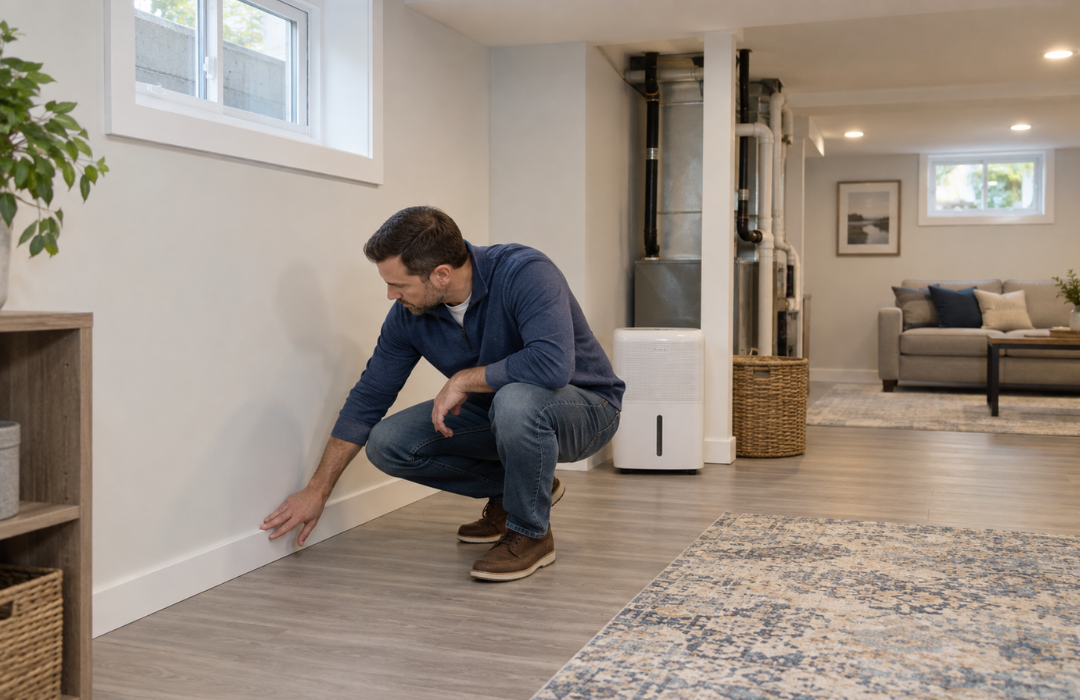
Basements are especially vulnerable to moisture, and problems are not always obvious right away. Check regularly for musty odors, water stains, peeling paint, condensation and damp areas along the walls or floor. A dehumidifier can reduce excess humidity, but leaks and water entering through the foundation should be investigated and repaired promptly.
Clean With Maintenance in Mind
Regular cleaning gives you an opportunity to see parts of the home that are usually overlooked. It can also prevent dirt and debris from affecting equipment and materials.
Vacuum dust from vents, keep baseboard heaters clear and clean kitchen and bathroom exhaust fan covers. Remove lint from the dryer screen after each load and inspect the exterior dryer vent for buildup or blockages.
When cleaning, look beyond the surface. A cabinet under the sink may look fine from the outside while hiding a slow plumbing leak inside.
Let Heating and Ventilation Systems Work Properly
Heating and ventilation equipment needs clear airflow. Furniture, rugs, curtains and stored items should not block vents, air returns or baseboard heaters.
Clean or replace filters according to the equipment manufacturer’s instructions. If your home has a heat recovery ventilator, or HRV, include its filters and core in your maintenance routine.
Unusual noises, weak airflow or inconsistent temperatures should be investigated. Waiting until equipment stops working completely can limit your repair options and leave you without heat when you need it most.
Walk Around the Exterior
The outside of your home protects everything inside it. Take a few minutes to inspect it after strong winds, heavy rain and winter storms.
Look for:
- Loose or damaged shingles
- Cracked siding or exterior caulking
- Clogged or damaged eavestroughs
- Downspouts that empty too close to the foundation
- Plants touching the siding
- Cracks in steps, walkways or the foundation
- Water collecting near the house
Newfoundland and Labrador weather can be hard on exterior materials. Catching storm damage or water drainage problems early can prevent moisture from reaching the structure.
Finish the Small Repairs
Minor repairs are easy to postpone because the home still functions without them. However, a cracked seal, loose fixture or slow drip can place added stress on surrounding materials.
Keep a simple list of repairs as you notice them. Set aside time each month to complete the safe, manageable jobs and arrange professional help for anything involving electrical wiring, structural concerns, persistent water entry or fuel-burning equipment.
A Little Attention Goes a Long Way
Caring for a home is less about achieving perfection and more about being consistent. Notice changes, control moisture, keep systems clear and address small repairs before they become larger ones.
These habits take less time than dealing with an emergency—and they can help your home remain comfortable, dependable and well maintained for years to come.