

Not every yard starts out as a picture-perfect blank canvas. Some are steep, rocky, uneven, or oddly shaped. At first glance, these spaces can feel like a landscaping headache. But the truth is, difficult gardens often have the most character—and with a bit of creativity, they can become some of the most beautiful and functional outdoor spaces around.
If your yard has slopes, rocks, or tricky soil, here are some practical ideas to help transform it into a family-friendly oasis.
Work With the Land, Not Against It
One of the biggest mistakes homeowners make is trying to completely reshape a challenging yard. Excavating, flattening, and hauling away rock can be extremely expensive.
Instead, work with the natural features of the property.
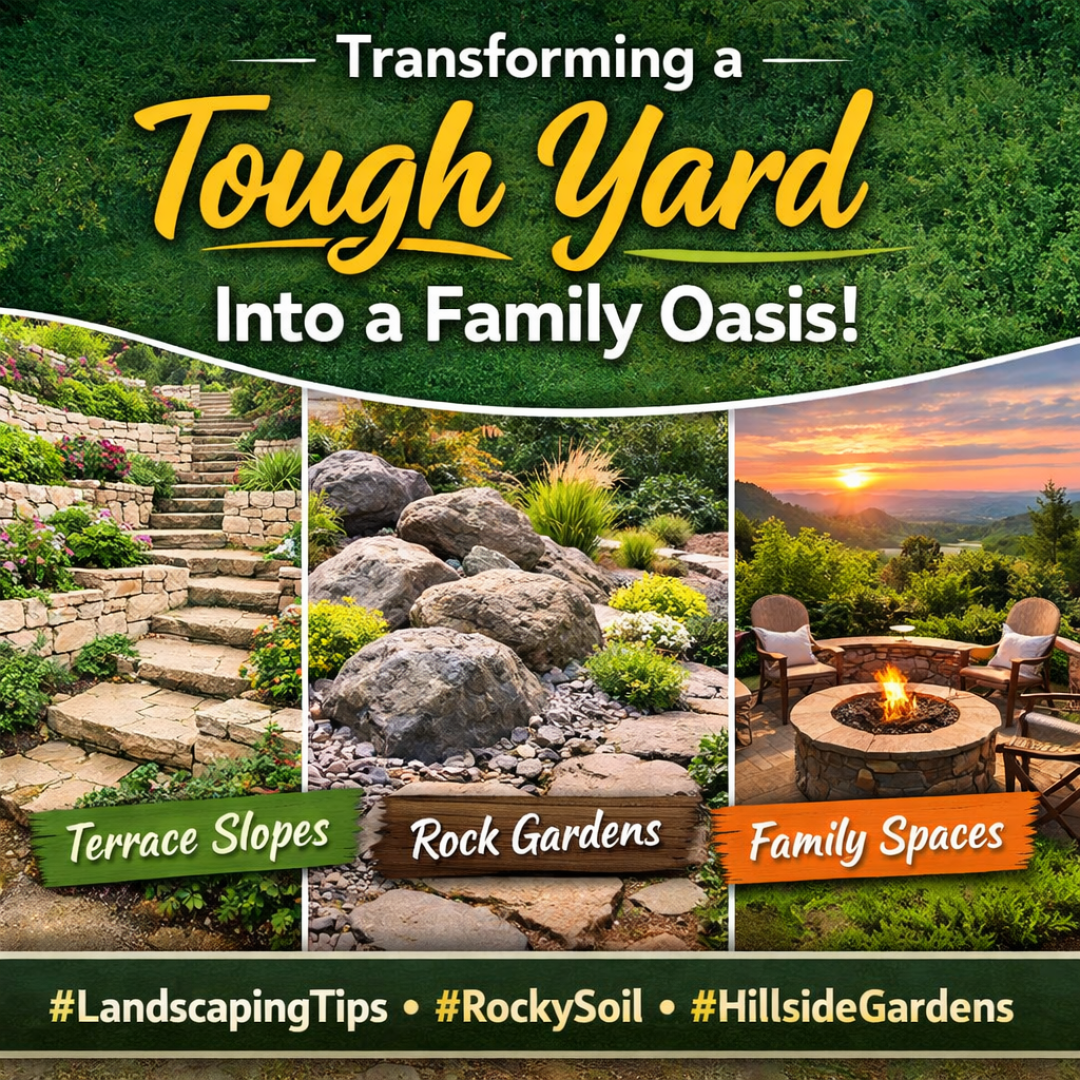
A hillside can become a series of terraces. Large rocks can turn into natural retaining walls or garden borders. Uneven areas can be divided into different zones for relaxing, playing, and gardening.
When you embrace the landscape rather than fight it, the design often feels more natural—and costs far less.
Terracing Makes Slopes Usable
Steep yards are common in many areas, but they don’t have to be wasted space.
Terracing is one of the most effective ways to make a hillside functional. By building a series of flat levels supported by retaining walls, you create separate outdoor areas that can be used in different ways.
For example:
- A top terrace could hold a patio or seating area
- A middle terrace could become a garden or firepit space
- A lower terrace might be perfect for a play area or lawn
Retaining walls can be built with natural stone, timber, or concrete blocks depending on the style of the home.
Terracing also helps control erosion and improves drainage—two common problems with sloped properties.
Turn Rocks Into Design Features
If your yard is full of rocks, consider it a landscaping advantage.
Large stones can become natural focal points in the garden. Instead of removing them, incorporate them into the design.
Some simple ideas include:
- Creating rock gardens with low-maintenance plants
- Using large stones as natural seating areas
- Building stone pathways or steps into slopes
- Designing raised planting beds around existing rocks
Rock gardens are especially effective in areas where soil is shallow or difficult to work with.
Choose Plants That Thrive in Tough Conditions
Trying to grow plants that need rich soil and constant watering can be frustrating in rocky or sloped gardens.
Instead, choose hardy plants that naturally thrive in these conditions.
Look for:
- Drought-tolerant perennials
- Ground covers that help prevent erosion
- Native plants suited to your region
- Low-maintenance shrubs
Ground covers are especially helpful on slopes because they stabilize soil and reduce the need for mowing.
Some homeowners also add ornamental grasses, which are durable and create beautiful movement in the landscape.
Add Safe Paths and Steps
If your yard has multiple levels or steep areas, well-planned pathways make a huge difference.
Safe and stable pathways are essential. Stone steps, gravel paths, or wooden stairways allow easy access between different parts of the garden.
Wide steps, good lighting, and sturdy handrails can make the space both practical and welcoming.
Paths also help guide visitors through the garden, making the yard feel larger and more thoughtfully designed.
Create Spaces the Whole Family Can Enjoy
A challenging yard doesn’t mean you have to sacrifice functionality.
Even small flat areas can become valuable gathering spots.
Consider adding:
- A patio or deck for outdoor dining
- A firepit area for evening gatherings
- A small lawn or artificial turf area for kids to play
- A quiet seating area surrounded by plants
Dividing the yard into zones often makes it feel more usable than one large open space.
Keep Maintenance in Mind
When designing a difficult garden, low maintenance should always be part of the plan.
Features like mulch, gravel beds, and native plants reduce the need for constant upkeep. Drip irrigation systems can also make watering more efficient on slopes.
The goal is to create a yard that looks great without turning weekend relaxation into a landscaping chore.
A Challenging Yard Can Become a Showpiece
Some of the most memorable outdoor spaces are built on landscapes that once seemed impossible to work with.
Hillsides, rocky soil, and uneven terrain offer opportunities to create layered gardens, dramatic views, and unique outdoor living areas.
With the right design approach, even the toughest yard can be transformed into a beautiful, family-friendly retreat.
And sometimes, those challenging landscapes end up becoming the most interesting feature of the entire property.