

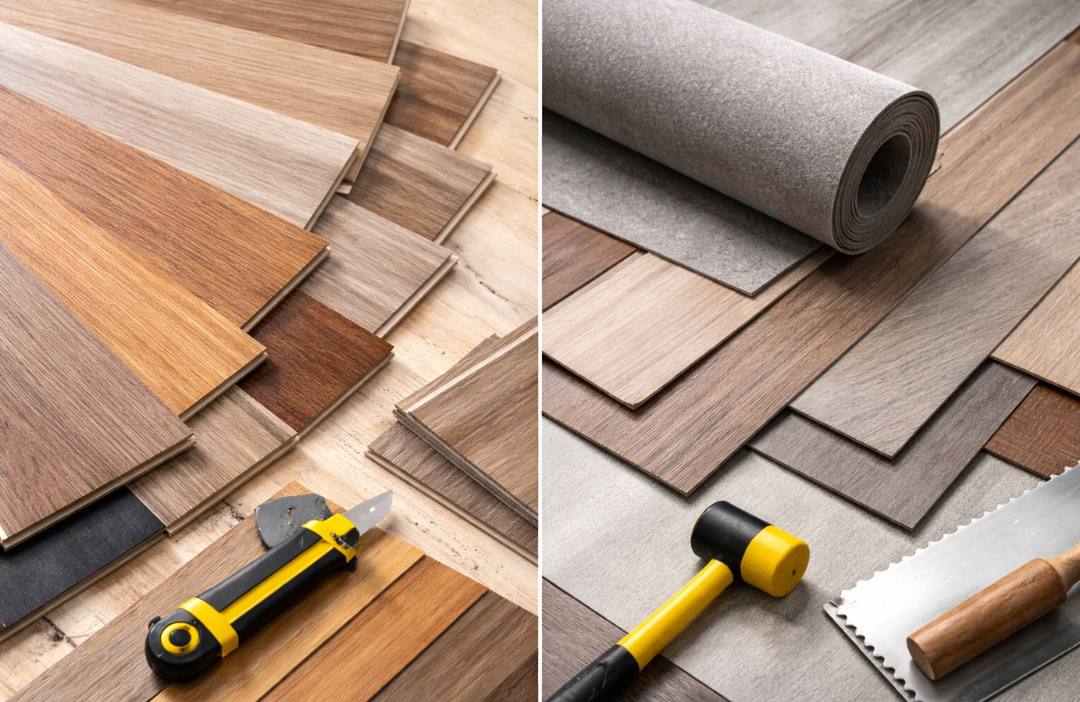
If you’ve started shopping for flooring, you’ve probably run into the same question pretty quickly: laminate or vinyl?
At first glance, they look similar. Both are designed to mimic hardwood. Both are budget-friendly. And both are built to handle everyday wear. But once you dig a little deeper, the differences start to matter—especially depending on where you plan to install it.
Let’s break it down in a way that actually helps you decide.
What You Should Know About Laminate Flooring
Laminate has been around for a long time, and there’s a reason it’s still popular. It’s made with a dense core and topped with a high-resolution image layer that gives it that wood look.
In many cases, it does a really good job of it.
Where laminate works best
Laminate is a solid choice for spaces that stay relatively dry—think living rooms, bedrooms, and hallways.
What people like about laminate
- It looks very close to real hardwood
- It holds up well against scratches (great for pets and kids)
- It’s usually one of the more affordable options
- Installation is straightforward with click systems
Where it falls short
- Water is its biggest weakness
- Spills aren’t a big deal, but standing moisture can cause swelling
- It has a firmer feel underfoot
What You Should Know About Vinyl Flooring
Vinyl flooring has come a long way. Today’s luxury vinyl planks and tiles are designed to look like wood or stone, and some are nearly indistinguishable at a glance.
The biggest advantage? Water resistance.
Where vinyl works best
Vinyl is often the go-to for kitchens, bathrooms, basements—anywhere moisture could be an issue.
What people like about vinyl
- Many options are fully waterproof
- Softer and quieter to walk on
- Handles spills, humidity, and temperature changes well
- Durable enough for high-traffic areas
What to keep in mind
- Lower-end options can look less realistic
- Some products may fade in direct sunlight over time
The Real Differences That Matter
Moisture and Water
This is usually the deciding factor.
If there’s any chance of regular moisture—wet boots, spills, humidity—vinyl is the safer choice. Laminate just isn’t built for that kind of exposure.
Durability in Everyday Life
Both are durable, but in different ways.
Laminate is excellent at resisting scratches. Vinyl is better at handling dents and moisture. Think about what your home deals with more.
Comfort and Sound
Vinyl has a bit of give to it, which makes it more comfortable and quieter. Laminate feels harder and can sound hollow without proper underlay.
Appearance
Laminate tends to win here, especially in mid-range products. The texture and finish often feel closer to real wood.
That said, higher-end vinyl has improved a lot—you just need to be selective.
Cost: What to Expect
Pricing depends on quality, but generally:
- Laminate tends to be slightly less expensive
- Vinyl can cost a bit more, especially waterproof options
Installation costs are usually comparable, especially for click-lock products.
So, Which One Should You Choose?
There’s no universal answer—it really comes down to how the space is used.
Go with laminate if:
- You want the most realistic wood look for your budget
- The area stays dry
- You’re updating living spaces or bedrooms
Go with vinyl if:
- You need something that can handle water
- The space gets heavy use or frequent spills
- Comfort and noise reduction matter to you
Final Thoughts
Both options offer good value, and either can work well when matched to the right space.
If you’re unsure, bring samples home and see them in your lighting. Walk on them. Compare the feel. That hands-on step often makes the decision a lot easier.