

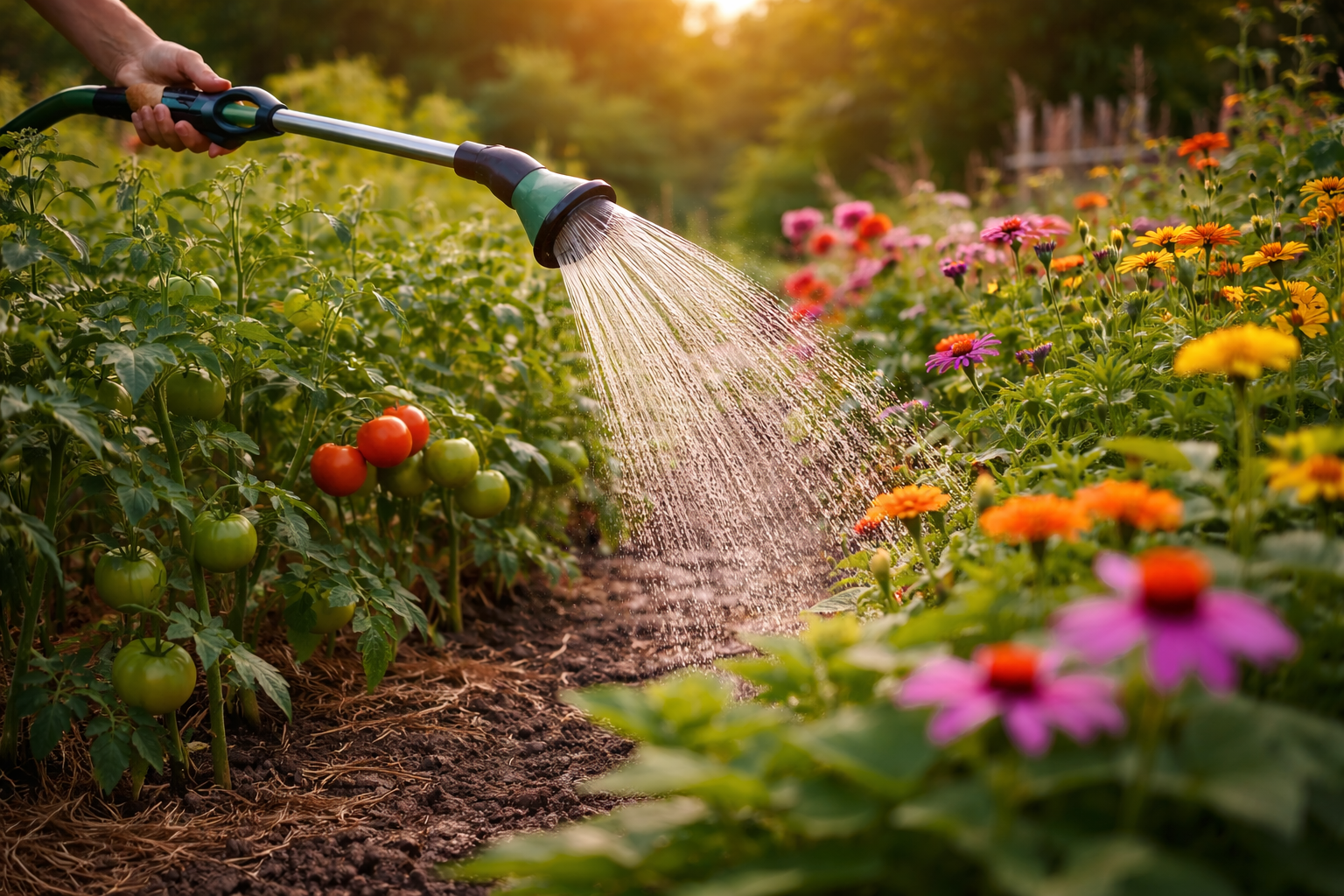
Watering your garden sounds simple—turn on the hose, give everything a good soak, and you’re done. But if you’ve ever had wilting plants, yellow leaves, or disappointing growth, chances are the issue wasn’t what you planted… it was how you watered. Getting this right doesn’t require fancy tools or a rigid schedule. It’s more about understanding what your garden actually needs and adjusting as you go.
Water deeply, not frequently
One of the most common mistakes is watering a little bit every day. It might feel like you’re helping, but shallow watering encourages shallow roots. That makes plants more vulnerable to dry spells and temperature swings. Instead, aim for a deeper soak a few times a week. You want the water to reach several inches into the soil so roots grow downward where moisture lasts longer. A good rule of thumb: if the top inch or two of soil is dry, it’s time to water.
Early morning is your best window
If you can choose when to water, go with early morning. The temperatures are cooler, there’s less wind, and more water actually reaches the roots instead of evaporating. Evening watering works too, but it can leave plants sitting damp overnight, which sometimes leads to disease—especially on leafy plants. Midday watering? It’s not harmful, but it’s less efficient. You’ll lose more water to evaporation, and the leaves can scorch if droplets sit in direct sun.
Focus on the roots, not the leaves
Plants don’t drink through their leaves—they take in water through their roots. So instead of spraying everything from above, direct water at the base of the plant.
This simple shift:
- Reduces water waste
- Helps prevent fungal issues
- Gets moisture exactly where it’s needed
If you’re using a sprinkler, just be mindful of how long it runs and how evenly it covers your beds.
Pay attention to your soil
Not all soil holds water the same way.
- Sandy soil drains quickly and may need more frequent watering
- Clay soil holds water longer but can become waterlogged if you overdo it
- Loamy soil (the ideal mix) holds moisture while still draining well
Before watering, stick your finger or a small trowel into the soil. If it’s still damp below the surface, hold off. Overwatering can be just as damaging as underwatering.
Use mulch to your advantage
If you’re not using mulch, you’re making watering harder than it needs to be.
A layer of mulch (wood chips, straw, or even grass clippings) helps:
- Lock in moisture
- Keep soil temperatures stable
- Reduce how often you need to water
Even a thin layer can make a noticeable difference.
Adjust for different plants
Not all plants have the same needs. Vegetables, flowers, and shrubs can vary quite a bit.
- Newly planted: need more frequent watering while roots establish
- Established plants: prefer deeper, less frequent watering
- Container plants: dry out faster and may need daily checks
If something looks stressed, don’t just add more water automatically—check the soil first. Wilting can mean too much water just as often as too little.
Watch the weather, not the calendar
It’s tempting to water on a fixed schedule, but weather changes everything. A cool, damp week means you can ease off. A hot, dry stretch means your plants will need more. Let the conditions guide you instead of sticking to a strict routine.
Make it easier on yourself
You don’t need a complicated setup, but a few small upgrades can save time and water:
- A soaker hose for garden beds
- A watering wand for better control
- A rain gauge to track how much water your garden is getting
Even just slowing down and watering with intention can make a big difference.