

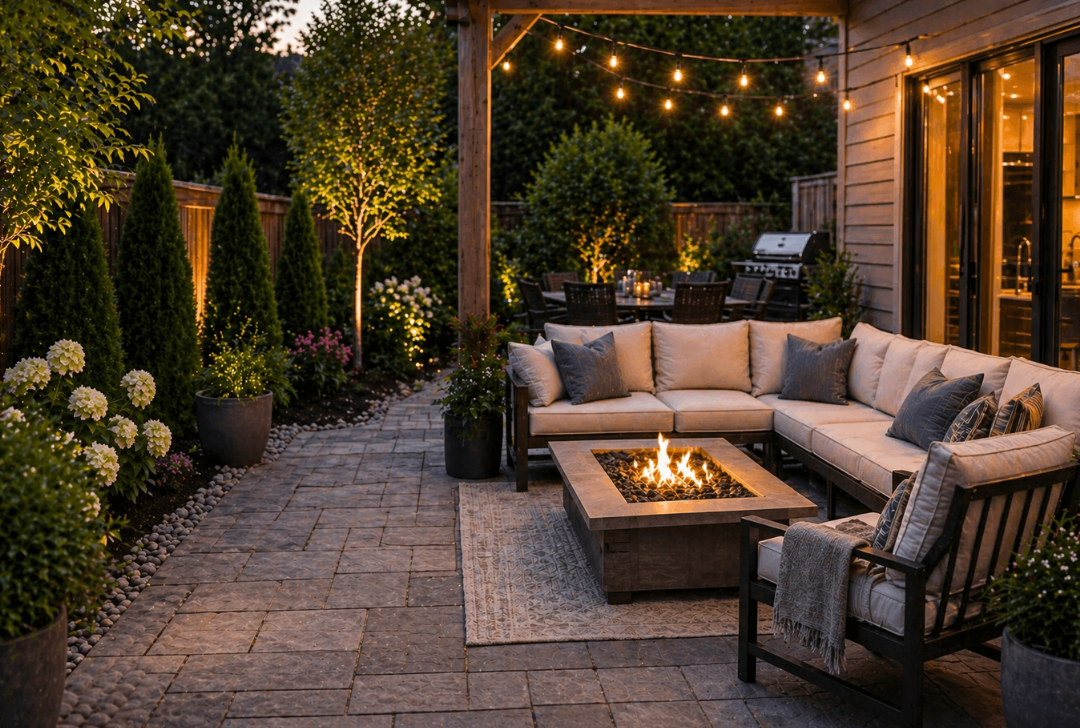
A patio tends to become one of those spaces you use more than you expect. It might not seem like much at first, but once it’s set up in a way that works, it’s where you end up spending a lot of your time when the weather is decent. Morning coffee, quick dinners, having people over—it all ends up there.
If you’re planning one out or reworking what you already have, it helps to keep things simple and think about how you’ll actually use it. Not how it looks in photos, but what you’ll realistically do out there. Some people want space for a table and a barbecue. Others want a couple of chairs and somewhere quiet to sit. Either way works—it just changes how you lay things out.
The surface is usually the first big choice people get stuck on. Interlocking stone is popular because it holds up well and requires little maintenance once installed. Concrete gives you a smooth, modern look while natural stone has a bit more variation and tends to feel less structured. It really just depends on what you’re drawn to and how much upkeep you’re willing to take on.
Furniture is where people sometimes overdo it. It’s easy to try to fill the space, but that can make it feel tight pretty quickly. A couple of comfortable chairs or a small seating setup usually goes a long way toward fitting in a full set. If you’re going to be out there often, comfort matters more than anything else. If it’s not comfortable, you won’t use it.
Think about sun protection before you get started. An umbrella might work for small areas, but if you spend a lot of time outside, something bigger and more permanent makes more sense.
Lighting is pretty straightforward. It doesn’t need to be anything complicated, just enough so the space still feels usable in the evening. String lights are an easy option and don’t take much effort to put up. A bit of low lighting near steps or along the edge of the patio helps, too, so you’re not dealing with dark spots.
Adding a few plants can make the whole space feel less bare. It doesn’t have to be a full garden—just a few planters here and there can make a difference. If you want something practical, herbs are an easy option and don’t take up much room.
If you’ve got the space, a fire pit is usually the one extra people are glad they added. It gives you a reason to stay out a bit longer and makes the patio feel more like a place to gather instead of just somewhere to sit.
One thing that helps tie everything together is how the patio connects back to the house. When it feels like a natural extension instead of a separate area, you end up using it more without really thinking about it.
At the end of the day, it doesn’t need to be perfect. A patio works best when it feels easy—somewhere you can sit down without planning it, and stay longer than you meant to.