

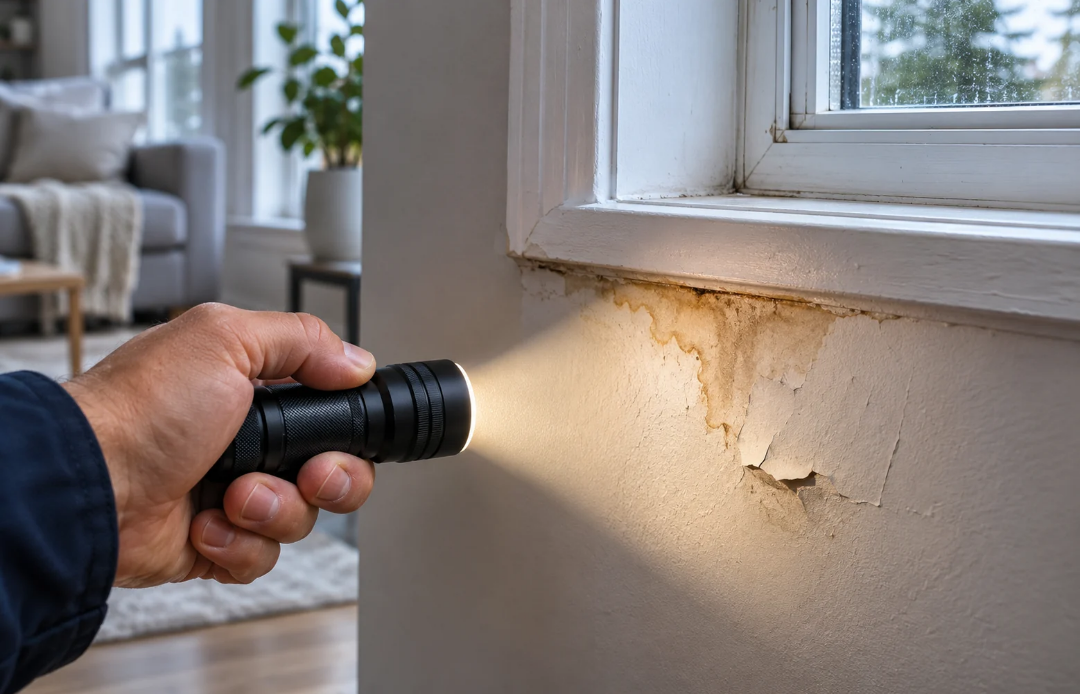
A long home inspection report can make a buyer nervous. But the number of items listed tells you less than what those items actually mean.
A loose cupboard handle and an active roof leak may both appear in the same report. They deserve very different responses.
The useful questions are: Is something unsafe? Is damage still happening? And do you need a specialist to explain the repair before making a decision?
Water damage deserves a closer look
Stained ceilings, damp basement walls, warped wood and musty smells deserve attention. They can point to roof leaks, plumbing problems, poor drainage or condensation.
The first question is where the moisture came from. The next is whether the cause has been corrected.
A dry stain may be left over from a repaired leak, but its appearance alone cannot confirm that. Ask about the history, request repair records and follow the inspector’s recommendation for further investigation.
Where mold is present, cleaning the surface alone will not solve an ongoing moisture problem. Health Canada advises fixing the underlying cause to prevent it from returning.
For sellers and homeowners, this is a reason to investigate recurring dampness before repainting or replacing damaged finishes. Keep records of what was repaired and who completed the work.
Findings that need a specialist
A home inspector examines several building systems, but some findings need a more detailed assessment. Canadian consumer guidance explains that inspectors can identify signs of major problems without being experts in every field.
Pay particular attention when a report recommends follow-up involving:
The structure. Concerns about foundation walls, framing or supports deserve a clear explanation. Ask what prompted the concern and whether a structural engineer should assess it. Avoid deciding how serious a crack is from a photograph or a quick online comparison.
Electrical components. If the report identifies damaged wiring, questionable connections or panel concerns, have a qualified electrician assess the affected components. Ask what work is needed and obtain a written quote.
The roof. Roof coverings, flashing and drainage are separate parts of the inspection. Ask whether the concern involves a limited repair or a broader problem, and have a roofer assess the recommended work.
Heating and plumbing. A system that operates during an inspection may still have defects requiring attention. If the inspector recommends service or further assessment, get that information before treating the issue as routine maintenance. These systems, along with the structure and roof, fall within the areas addressed by Canadian home inspection standards.
For buyers, a specialist’s written findings and repair quote provide a firmer basis for a decision than a rough allowance.
Read what could not be inspected
An inspection report also tells you where information is missing.
Home inspectors can only assess what they can safely see and access. Snow on the roof, a blocked attic hatch or a locked mechanical room can leave parts of the home unassessed. Because a standard inspection does not involve opening walls or lifting flooring, some problems may remain hidden.
Read the limitations section and ask what follow-up is possible. Sellers can help by providing clear access to the areas and equipment the inspector needs to examine.
Also confirm which services are included. For a property with a private septic system, for example, arrange the appropriate separate assessment rather than assuming a general inspection covers it.
Some concerns require testing. A visual inspection cannot establish a home’s radon level. Health Canada recommends testing for three to twelve months, with at least 91 days during the heating season—longer than a typical purchase inspection period.
Turn the report into a plan
Ask the inspector to help you separate the findings into three practical groups:
- Safety concerns that need prompt attention.
- Active defects that could cause further damage.
- Maintenance and future replacements that need planning.
Then ask what remains uncertain, which specialists to contact and how soon the recommended work should happen.
If you are buying, review the findings promptly with your REALTOR® and obtain legal advice about your agreement where needed. Any request for repairs, price changes or other next steps depends on the contract and its deadlines.
If you are selling, gather service records, warranties and repair invoices so you can respond with useful information.
If you already own the home, use the report to set repair priorities and build a maintenance budget.
An inspection finding becomes easier to assess when you understand what is known, what still needs investigation, and the likely repair options and costs. Those details help you decide what the property needs—and what you are prepared to take on.
This article provides general information and does not replace a professional home inspection or advice from a qualified tradesperson, engineer or lawyer. Every property and purchase agreement is different. Consult the appropriate professionals about specific findings, repairs and contractual decisions.