

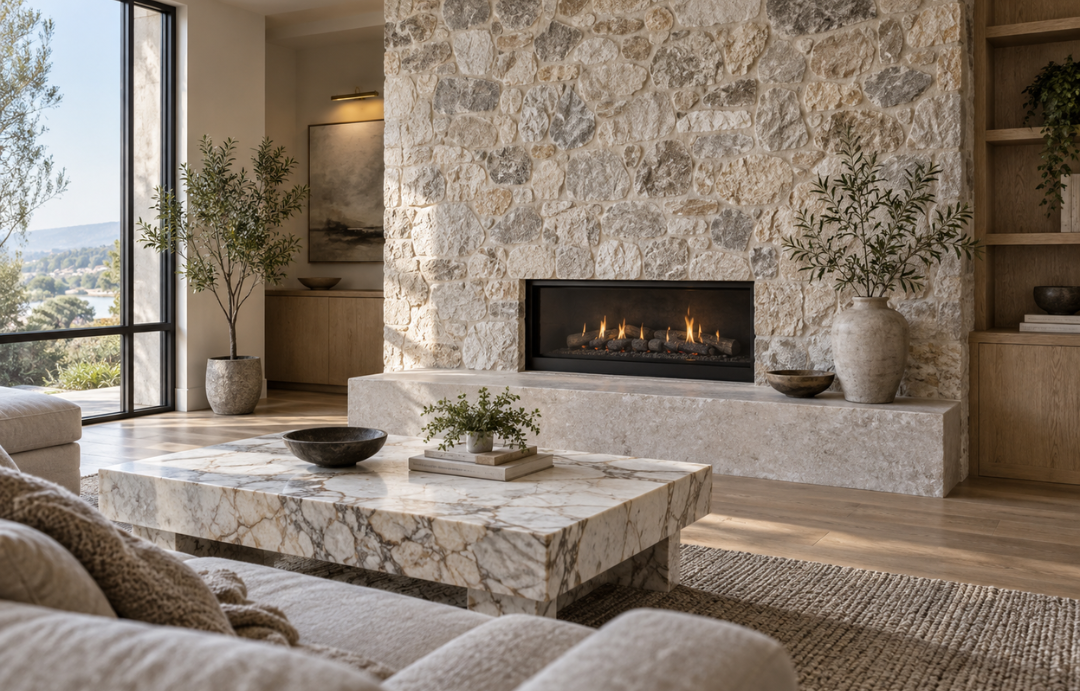
A room can have fresh paint, good furniture and still feel a little flat. Sometimes, what’s missing is a surface with some variation: a soft vein, a rough edge or a color that changes as the light moves across it.
Natural stone brings those details into a home. A textured fireplace surround can give a plain living room a focal point. A small marble vanity can add interest to a simple bathroom. The effect depends as much on the stone’s finish and color as on the amount used.
The same stone can look surprisingly different
Choosing granite, marble or limestone is only part of the decision. The finish changes how the surface catches light and how it feels under your hand.
- Polished stone has a glossy, reflective surface that can make colors and veining appear more pronounced.
- Honed stone is smooth with little or no shine, giving it a quieter appearance.
- Brushed or leathered finishes add texture. The depth and feel vary with the stone, so touching a sample matters as much as seeing it.
These differences can change the character of a room. A polished surface might suit a kitchen with crisp cabinetry and glass lighting. A softer finish could sit comfortably beside oak cabinets and linen fabrics. Neither requires the whole room to follow one decorating style.
Look past the main color
A stone described as “white” may contain cream, grey, green or gold. Those smaller colors can make the difference between a surface that works with the room and one that seems slightly out of place.
Bring samples beside the finishes that will stay: flooring, cabinets, backsplash and paint. A cool grey stone may look very different beside warm cream cabinetry than it did under showroom lighting.
Check it in daylight and again with the room’s lights on. For a countertop, lay the sample flat. For a wall, hold it upright.
Before approving a slab, ask to see the actual piece being used. A small sample cannot show where a strong vein will run or how much the color varies across a large surface. For tile, look at several pieces together.
Give the eye somewhere to settle
Stone does not need to cover every surface to make an impression.
In a kitchen with patterned flooring, subtle stone may be enough. In a plain bathroom, a vanity top with stronger veining can become the main feature.
Texture also works through contrast. Rough stone beside smooth cabinetry makes both surfaces more noticeable. A honed stone hearth can add a softer visual break beneath a glossy tile surround.
If a room already has several competing patterns, adding dramatic stone may make it feel busier. Choose where you want attention to land, then keep nearby finishes relatively simple.
For a smaller project, ask a fabricator about remnants for a vanity top or shelf. Confirm the dimensions and the full fabrication and installation price before deciding it is a bargain.
Choose for the cleanup, too
A surface should suit the way the household lives.
Marble and limestone are sensitive to acids. Lemon juice, vinegar and some cleaners can leave dull marks known as etching. Sealing may improve stain resistance, but it does not make stone stain-proof or prevent acid etching.
Sealing needs also vary; not every stone requires the same treatment or schedule. Ask for care instructions for the exact material and finish being installed. The Natural Stone Institute recommends appropriate mild cleaners and advises against acidic cleaning products.
Think about the location as well. Deep texture behind a stove means more uneven surface to clean. For an entry or bathroom floor, ask about slip resistance when wet. For outdoor stone in Newfoundland and Labrador, have the supplier confirm that the specific product and installation are suitable for local freeze-thaw conditions.
If you are buying a home with stone surfaces, ask what they are and how they have been maintained. If you are preparing to sell, assess the condition of existing stone before assuming it needs replacing.
Start with one area that feels unfinished. Compare a few samples in the room, consider the daily care and choose the stone that works with what is already there. A carefully chosen surface can give a familiar space something worth noticing.