

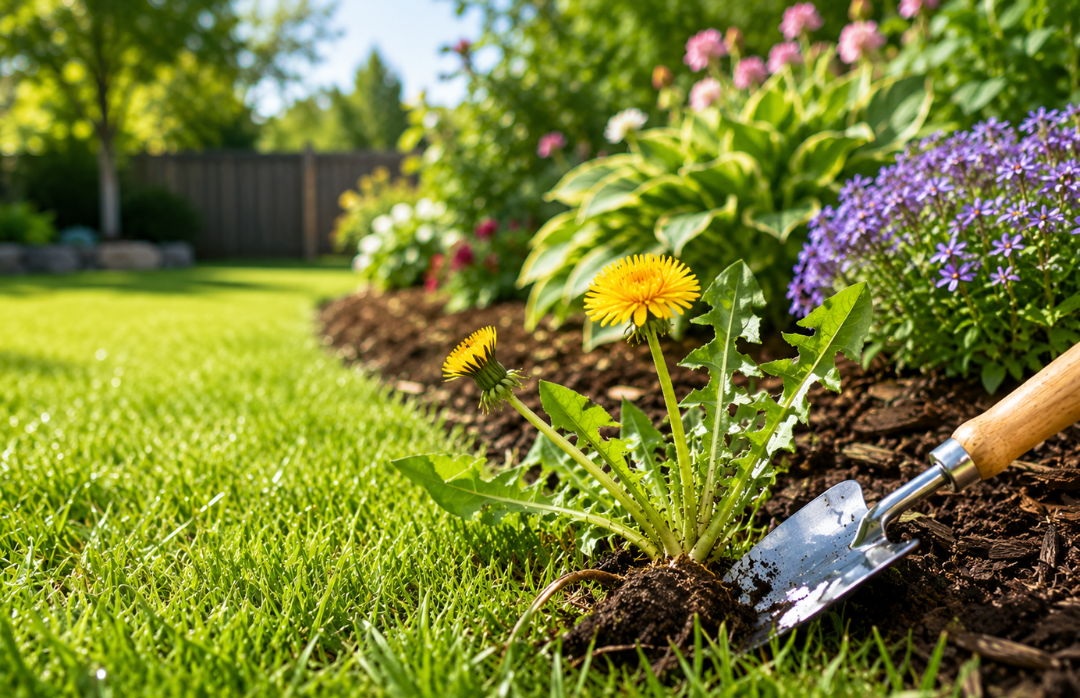
Weed control and prevention is easier when you stop weeds before they become established. Once weeds take hold, they compete with your lawn and garden plants for water, nutrients, and sunlight. A few simple habits can reduce weed growth and make ongoing maintenance much easier.
Build a Healthy Lawn
A thick, healthy lawn is one of the best forms of weed control.
Many common lawn weeds thrive in thin or damaged turf. Grass that grows densely leaves less room for weeds to establish. Regular mowing, proper watering, and overseeding bare areas help create a lawn that naturally resists weed growth.
Health Canada recommends maintaining healthy turf as an important part of preventing weed problems.
Mow at the Right Height
Cutting grass too short can weaken your lawn and create openings for weeds.
Most lawns benefit from being kept around 6 to 8 cm high during the growing season. Taller grass shades the soil surface and makes it harder for weed seeds to germinate.
Avoid removing more than one-third of the grass blade during a single mowing.
Pull Weeds Before They Spread
Removing weeds while they are young saves time later.
Many weeds produce hundreds or even thousands of seeds. Pulling them before they flower can prevent future infestations. After a rainfall is often the best time to weed because the soil is softer and roots come out more easily.
For perennial weeds such as dandelions, remove as much of the root as possible to reduce regrowth.
Apply Mulch to Garden Beds
Mulch helps block sunlight from reaching weed seeds.
Organic mulches such as shredded bark, wood chips, straw, or compost can greatly reduce weed growth while helping the soil retain moisture.
Apply mulch to a depth of 5 to 8 cm around trees, shrubs, and garden plants. Leave a small gap around stems and trunks to prevent moisture-related issues.
Fill Bare Areas
Open soil provides an ideal place for weeds to grow.
Cover bare areas with mulch, ground covers, or desirable plants. In vegetable gardens, closer plant spacing can also help shade the soil and reduce weed germination.
The less exposed soil you have, the fewer opportunities weeds have to become established.
Water Deeply and Less Often
Frequent shallow watering encourages weak root systems.
Instead, water deeply so grass and garden plants develop stronger roots. Healthy roots help plants compete more effectively against weeds.
Morning watering is usually the best choice because it allows foliage to dry during the day.
Improve Soil Conditions
Compacted soil can create conditions that favor certain weeds.
Aerating lawns and adding organic matter to garden beds can improve drainage and root growth. Healthy soil supports stronger plants, making weed control easier over time.
If your lawn struggles year after year, a soil test can help identify nutrient deficiencies or pH issues.
Consider Natural Weed Prevention Methods
Many homeowners prefer not to use chemical approaches for weed control.
Corn gluten meal is sometimes used as a natural weed suppressant, but the results can be inconsistent. Regular hand-pulling, proper mulching, correct mowing practices, and healthy soil provide the most dependable long-term weed control.
Know Your Provincial Rules
Pesticide regulations vary across Canada.
Several provinces restrict or limit the cosmetic use of lawn and garden pesticides. Before purchasing or applying any weed control product, check the regulations that apply in your province and always follow label directions.
Stay Consistent
Successful weed control is rarely about one treatment.
A few minutes spent each week inspecting your lawn and garden can prevent larger problems later. Pull weeds while they are small, maintain healthy growing conditions, and refresh mulch when needed.
The best weed control and prevention plan focuses on creating conditions where your lawn and garden plants thrive and weeds struggle to gain a foothold.