

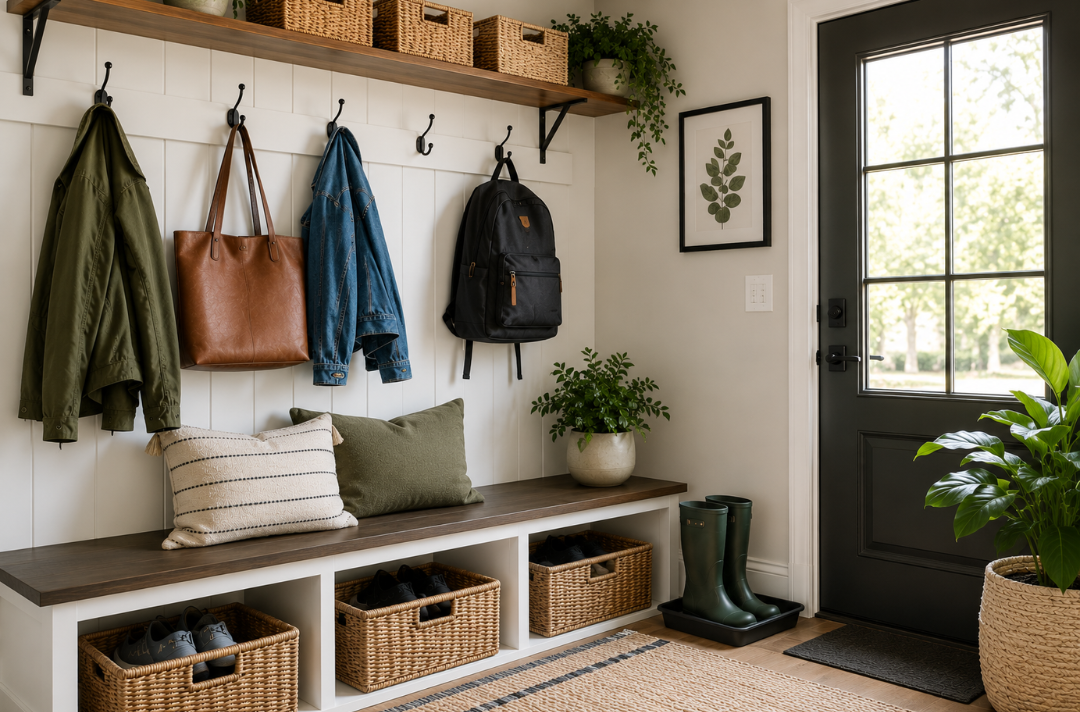
If there is one area of the house that takes a beating every day, it is the entryway. Shoes get kicked off, jackets end up hanging over chairs, and somehow there is always a random pile of bags sitting by the door. It happens fast, especially in busy households.
A lot of people think a mudroom has to be this fancy custom space with built-in cabinets and matching storage bins, but honestly, it does not. Some of the most useful mudrooms are just small areas set up in a smart way. Even a little space near the back door can make life easier if it is organized properly.
The first thing that helps is having somewhere obvious to drop things. Hooks are probably the easiest fix. They are cheap, easy to put up, and they stop coats from ending up everywhere else in the house. If everyone has their own hook, it cuts down on the mess almost immediately.
A bench is another thing that makes a bigger difference than people expect. It gives you somewhere to sit while pulling off wet boots, but it also helps define the space. It does not need to be expensive either. Plenty of people use an older bench, a storage chest, or even something they picked up second hand and repainted over the weekend.
Storage underneath is always worth adding if you can. Baskets work well because they hide the clutter without making the space feel too busy. Gloves, hats, reusable grocery bags, dog leashes — all those little things that usually end up scattered around can finally have a spot.
Vertical storage is especially important in smaller homes. Using the wall space helps free up the floor and makes the area feel less crowded. Floating shelves, peg rails, and stackable bins can all add storage without requiring a major renovation. Labeling baskets or bins can also help children stay organized because everyone knows where their items belong.
You also want to think about materials that can handle real life. There is no point putting something delicate in a mudroom because this area gets dirty fast. A durable mat near the entrance is probably one of the best investments you can make, especially during rainy seasons or winter months. It saves your floors and cuts down on cleaning.
Lighting helps too, although it is something people often forget about. A dark entryway can make the whole space feel cramped and cluttered. Sometimes simply changing an old light fixture or using a brighter bulb makes the area feel cleaner and more welcoming.
What matters most is making the space work for your daily routine. It does not have to look perfect. In fact, the best mudrooms usually look lived in because they are actually being used. The goal is just to create a spot where things naturally stay more organized instead of getting dumped all over the house.
If you are planning to sell your home, a functional mudroom can also appeal to buyers. Storage and organization are high on many buyers’ wish lists, especially for busy families. Even a small, thoughtfully designed entry area can help your home feel more functional and well maintained.
At the end of the day, creating a mudroom is really about making life a little less chaotic. You do not need a massive budget or a full renovation to do that. A few hooks, a bench, and some smart storage can go a long way.