

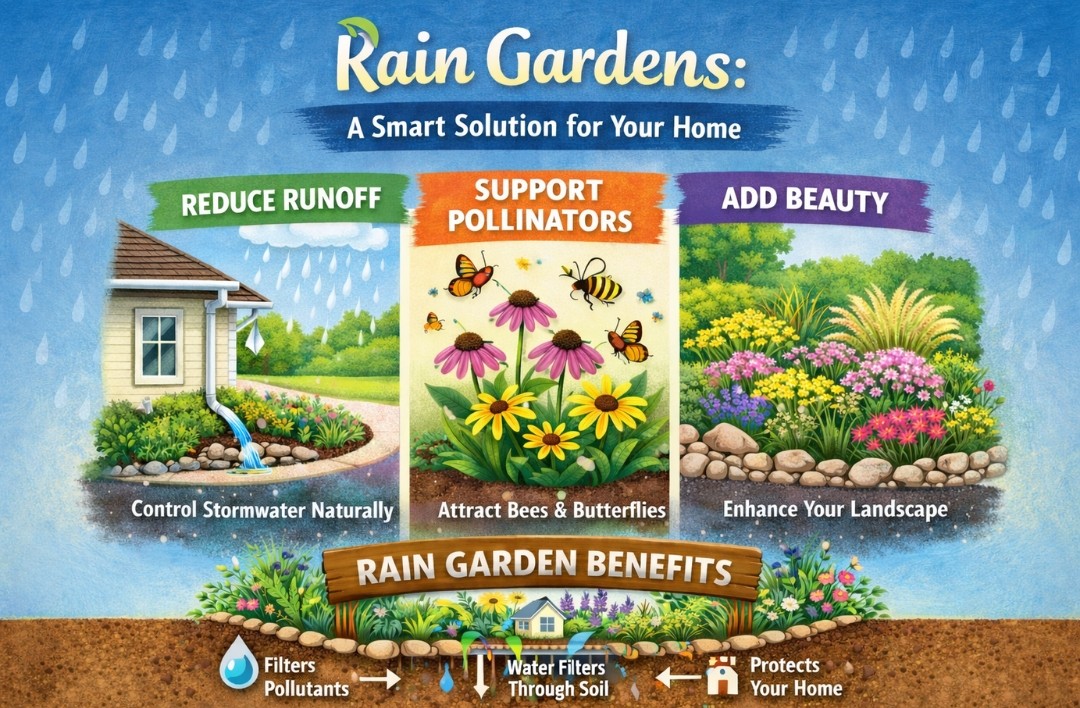
When it rains, most of us watch water rush off roofs, across driveways, and down the street toward the nearest storm drain. It disappears quickly—but not without consequences. That runoff often carries oil, fertilizer, and debris into local waterways.
A rain garden offers a simple, attractive solution. It turns excess rainwater into something useful while adding beauty and life to your yard.
For homeowners who care about sustainable living and smart landscaping, rain gardens are gaining attention for all the right reasons.
What Is a Rain Garden?
A rain garden is a shallow, bowl-shaped garden designed to collect and absorb rainwater from roofs, driveways, and other hard surfaces. Instead of water rushing straight into storm drains, the garden temporarily holds it and allows it to slowly soak into the ground.
Typically about 6–12 inches deep, rain gardens are planted with grasses, flowers, shrubs, or small trees that can tolerate both wet and dry conditions. These plants help filter pollutants while their roots improve soil drainage.
The result is a landscape feature that works with nature rather than against it.
Why Rain Gardens Matter
Rain gardens might look like ordinary flower beds, but they play an important environmental role.
They reduce flooding and runoff
When rain falls on hard surfaces like asphalt or compacted soil, it has nowhere to go. Rain gardens capture that water and allow it to soak into the ground slowly, reducing pressure on stormwater systems and lowering flood risk.
They improve water quality
As runoff passes through the soil and plant roots, pollutants such as fertilizers, sediment, and oils are naturally filtered out before the water reaches streams or lakes.
They support wildlife
Native plants used in rain gardens provide food and shelter for birds, bees, butterflies, and other pollinators.
They protect your property
Directing water away from foundations and paved areas can help prevent pooling, erosion, and water damage.
They add beauty and value
A thoughtfully designed rain garden can become a colorful focal point in a yard while demonstrating environmentally responsible landscaping—something more buyers are beginning to appreciate.
How to Start a Rain Garden
Creating a rain garden is simpler than many people think. With a bit of planning, it can often be completed in a weekend.
Choose the right location
Look for an area where water naturally collects after rainfall. A spot about 10 feet away from your home is ideal so that water drains away from the foundation.
Downspouts are often perfect sources of runoff to direct into a rain garden.
Test your soil
Rain gardens work best in soil that drains well. Dig a small hole and fill it with water. If it drains within a day, the location should work.
Shape the garden
Dig a shallow depression—usually 6 to 12 inches deep—and create gently sloped sides so water can flow in easily.
Improve the soil
Mix compost or sand into the soil to improve drainage and support healthy plant growth.
Choose the right plants
Plants should be able to handle both temporary wet conditions and dry spells between storms. Native grasses, perennials, and flowering plants are usually ideal.
Layering plants with different heights and root depths helps improve filtration and creates a more natural look.
How to Maintain a Rain Garden
One of the biggest misconceptions is that rain gardens require constant care. In reality, they are often easier to maintain than traditional lawns.
Simple upkeep includes:
- Watering plants during the first growing season
- Removing weeds occasionally
- Adding mulch to retain moisture
- Checking that water flows into the garden properly
Once established, the deep-rooted plants help maintain soil structure and drainage naturally.
A Small Change with a Big Impact
As weather patterns shift and heavy rainfall becomes more common, communities are looking for smarter ways to manage water.
Rain gardens are one of the simplest forms of “green infrastructure.” They mimic natural water cycles by slowing runoff, filtering pollutants, and allowing water to return to the ground instead of overwhelming drainage systems.
For homeowners, they offer something even better: a landscape feature that’s both practical and beautiful.
Instead of watching rainwater rush away, you can put it to work—right in your own backyard.