

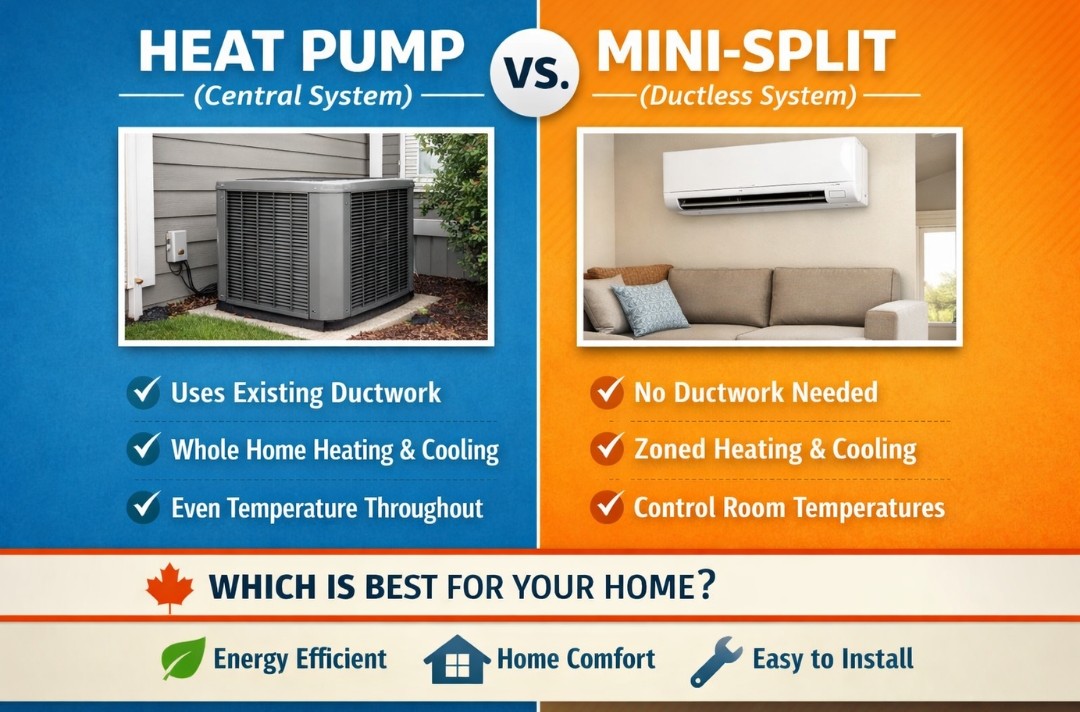
If you’re thinking about upgrading your home’s heating and cooling system, chances are you’ve heard about heat pumps and mini-splits. Both are becoming increasingly popular as homeowners look for energy-efficient ways to stay comfortable year-round.
At first glance, the two can seem confusing because they often use the same technology. But the way they’re installed and how they deliver heating and cooling can be quite different.
Understanding the basics can help you decide which system might work best for your home.
What Is a Heat Pump?
A heat pump is an energy-efficient system that moves heat rather than generating it. In winter, it extracts heat from outside air and transfers it into your home. In summer, the process reverses, removing heat from your home and releasing it outside.
Because the system transfers heat instead of creating it, heat pumps can be much more energy efficient than traditional heating systems.
According to Natural Resources Canada, heating and cooling account for about two-thirds of energy use in the average Canadian home, which is why choosing the right system can have a noticeable impact on energy costs.
There are two main types homeowners typically consider:
- Central (ducted) heat pumps
- Ductless mini-split heat pumps
What Is a Mini-Split?
A mini-split is essentially a ductless version of a heat pump system.
Instead of distributing air through ductwork, it uses an outdoor compressor connected to one or more indoor units mounted on the wall or ceiling.
These indoor units deliver heating or cooling directly to specific rooms or “zones” in the home.
Because mini-splits don’t require ductwork, they’re often used in:
- Older homes without ducts
- Home additions or renovations
- Condos or apartments
- Homes with electric baseboard heating
Key Differences Between Heat Pumps and Mini-Splits
While they rely on similar technology, the main difference is how the air is delivered through your home.
Central Heat Pump
- Uses existing ductwork
- Heats or cools the entire home at once
- Works well if your house already has ducts
- Provides a more traditional whole-home system
Mini-Split (Ductless System)
- No ductwork required
- Uses individual indoor units for each room or area
- Allows zoned heating and cooling
- Often easier to install in older homes
In many cases, the best option depends on your home’s layout, infrastructure, and comfort goals.
Which System Might Work Better for Your Home?
There isn’t a one-size-fits-all answer, but here are a few situations where each system may make more sense.
A Central Heat Pump May Be Better If:
- Your home already has ductwork
- You want a whole-home heating and cooling solution
- You prefer a hidden system without wall-mounted units
A Mini-Split May Be Better If:
- Your home doesn’t have ducts
- You want different temperatures in different rooms
- You’re adding heating or cooling to a specific area of the house
Mini-splits are particularly popular in older homes because installation can be less disruptive compared to adding full ductwork.
Energy Efficiency Benefits
Both systems can significantly reduce energy use compared with older electric or oil heating systems.
Many homeowners are also exploring heat pumps because they:
- Provide both heating and cooling
- Can lower long-term energy costs
- Work well with modern energy-efficiency upgrades
In recent years, federal and provincial programs have also offered incentives for installing heat pumps, making them more attractive financially.
How to Maintain Your Heat Pump or Mini-Split
Like any home system, proper maintenance helps ensure reliable performance and longer life.
Here are a few simple maintenance tips homeowners can follow.
Clean or Replace Filters Regularly
Dirty filters restrict airflow and reduce efficiency. Most manufacturers recommend checking them monthly and cleaning or replacing as needed.
Keep Outdoor Units Clear
Leaves, snow, and debris can block airflow around the outdoor unit. Keeping the area clear improves performance and prevents strain on the system.
Schedule Annual Professional Service
It is recommended to have regular service for heating and cooling equipment to maintain efficiency and performance.
Check Indoor Units for Dust
For mini-split systems, dust buildup on indoor units can reduce airflow and efficiency.
Monitor Performance
If your system suddenly struggles to heat or cool your home, it may need professional attention before a small issue becomes a bigger repair.
Heat pumps and mini-splits are both high-efficiency options that can improve comfort while reducing energy use. The best choice often depends on your home’s layout, existing heating system, and how much flexibility you want in controlling room temperatures.
If you’re considering an upgrade, speaking with a qualified HVAC professional can help determine the right system size and setup for your home. And if you’re planning to sell your home in the future, modern energy-efficient heating systems are often a feature buyers appreciate.